Spencer Cavendish Quotes
As the result of two successful campaigns, of the employment of an enormous force, and of the expenditure of large sums of money, all that has yet been accomplished has been the disintegration of the [Afghan] State … and a condition of anarchy throughout the rest of the country.
At first reading, this quotation appears to have been made in 2013 with respect to the American-led Coalition in the Afghan War in 2013. But this was 133 years earlier. Little had changed.
Spencer Cavendish, 1833–1908, Marquis of Hartington & 8th Duke of Devonshire, British Secretary of State for India, 1880
Sourced by: Eigen's Political and Historical Quotations

One of the reasons that foreign superpowers have failed in their efforts in Afghanistan is that they tried to install and work through a central, national government. See {634657} and {634659}.
The Russians had invaded Afghanistan and, like the earlier invaders who had also failed, they did not understand the people or their culture. (See {634659}). They tried to impose a centralized Communist government, not realizing that the Afghanistan people were not experienced with any kind of central government. There was some tribal structure but that was mostly a traditional consensus process. Most Afghan men were the “kings” of their own families and did not respond to any other governance though they can be nfluenced by tribal leaders, warlords, and imams.


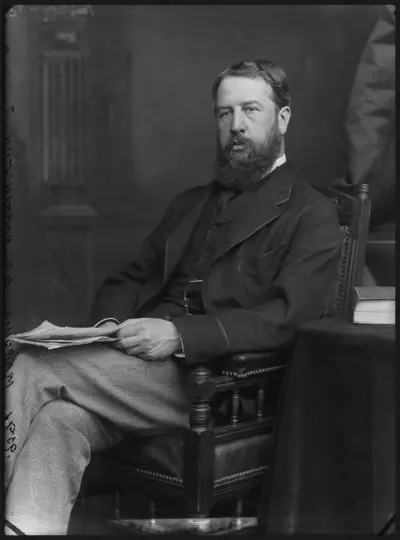
Spencer Compton Cavendish, 8th Duke of Devonshire KG GCVO PC PC (Ire) FRS, styled Lord Cavendish of Keighley between 1834 and 1858 and Marquess of Hartington between 1858 and 1891, was a British statesman. He has the distinction of having served as leader of three political parties: as Leader of the Liberal Party in the House of Commons (1875–1880), of the Liberal Unionist Party (1886–1903) and of the Unionists in the House of Lords (1902–1903). After 1886 he increasingly voted with the Conservatives. He declined to become prime minister on three occasions, because the circumstances were never right. Historian Roy Jenkins said he was "too easy-going and too little of a party man." He held some passions, but he rarely displayed them regarding the most controversial issues of the day.
