Nikita Khrushchev Quotes
The Americans have surrounded our country with military bases and threatened us with nuclear weapons, and now they will learn just what it feels like to have enemy missiles pointed at you; we'd be doing nothing more than giving them a little of their own medicine.
Khrushchev, Nikita. Khrushchev Remembers. Translated by Strobe Talbott, Little, Brown and Company, 1970.


This was his last publication. He died of a heart attack as the magazine was being printed. Since this was written one other possible use of nuclear weapons has been suggested—namely, retaliation for a biological attack. From a policy point of view, maintaining an arsenal of biological weapons for retaliatory purposes is dangerous and use for retaliation of biological weapons is not very controllable and arguably less humane than a nuclear weapon. His point however still holds. We have to have a national defense policy against many threats and we have to have defense policies that handle all these without nuclear tactics is insufficient to handle any of the threats without causing more problems and we have other weapons and techniques that are just as, if not more, effective. They and systems under development have the major role in our current defense policy.


The alternative deterrent was to maintain an army of over 2 million men overseas in both Europe and Asia, and the cost was much greater than the then perceived cost of nuclear weapons. At the time no one figured the cost of coping with the radioactive material and waste as well as the cleanup of nuclear bomb factories like Hanford. These costs were still not known byt the 21st century.

Russia is not the only nation who believed this. There were and are some politicians and military officers in almost every country who believe this. However, for the last few centuries, this has rarely been the view held by the majority of the politicians and military in most nations. And even fewer where the leadership accepted this posiitin. Russia, was one of those counties that did hold this few and kade it policy was in the 2nd decade of 2016,


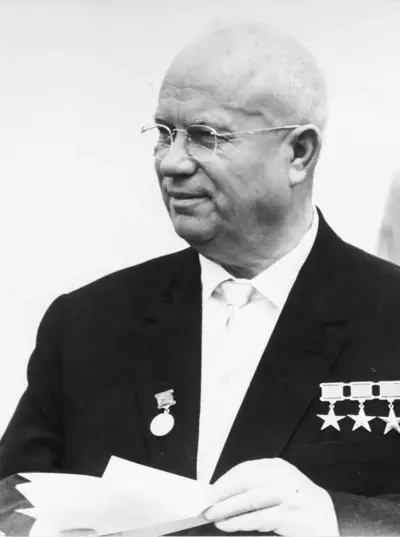
Nikita Sergeyevich Khrushchev led the Soviet Union as the First Secretary of the Communist Party of the Soviet Union from 1953 to 1964 and as chairman of the country's Council of Ministers from 1958 to 1964. During his rule, Khrushchev stunned the communist world with his denunciation of Stalin's crimes and began De-Stalinization. He sponsored the early Soviet space program, and enactment of relatively liberal reforms in domestic policy. After some false starts, and a near-nuclear war over Cuba, he conducted successful negotiations with the United States to reduce Cold War tensions. His proclivity toward recklessness led the Kremlin leadership to strip him from power, replacing him with Leonid Brezhnev as First Secretary and Alexei Kosygin as Premier.
