Joseph Rotblat Quotes
The decision to use the atom bomb on Japanese cities, and the consequent buildup of enormous nuclear arsenals, was made by governments, on the basis of political and military perceptions.
Rotblat, Joseph. "Remember Your Humanity." Les Prix Nobel: The Nobel Prizes 1995, edited by Tore Frängsmyr, Nobel Foundation, 1996.


This quotation is very important in helping to understand the 1950s in America with respect to nuclear weapons policy. McCormick was one the better educated, sophisticated, and influential Americans. Yet he appears to be a technological and nuclear ignoramous. Most people had not yet realized that atomic weapons were not just much larger traditional bombs. They could do terrible damage, but it would always be localized they thought. Chicago might be destroyed but the people out of range would be OK. He never got it that a dirty bomb could be dropped on Detroit and depending on which way the wind is blowing could wipe out Chicago and much of the Midwest as well. He knew nothing of the genetic effect the radiation, nor the implications for the environment of maintaining a large nuclear manufacturing industry. He and many like him did not realize that after the first bombs were created, how easy it would be for the Russians and others to also develop a nuclear arsenal. And 50,000 warheads was just a matter of effort. The implications of these things would inhibit our carrying out his and others ideological views of foreign policy. Oppenheimer and most nuclear scientists explained all this, but believing them and acting on those beliefs would have been too much of a change.

1st Earl Mountbatten of Burma


The Scientific Project that developed the Atomic Bomb. Oppenheimer was the great physicist who directed the successful development of the atomic bomb so as to build the weapon before Hitler did in World War II. However, as the technology evolved, he had doubts as to the wisdom of creating even more powerful hydrogen weapons. His viewpoint was hurting the administration’s policy of rapid unlimited nuclear weapons development, and he was the victim of a character assassination whereby his security clearance was withdrawn. The “father” of the atomic bomb was the first American casualty of atomic weapons development.
The Scientific Project that developed the Atomic Bomb


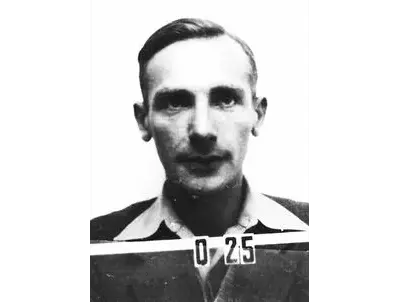
Sir Joseph Rotblat KCMG CBE FRS was a Polish physicist, a self-described "Pole with a British passport". Rotblat worked on Tube Alloys and the Manhattan Project during World War II, but left the Los Alamos Laboratory after the war with Germany ended. His work on nuclear fallout was a major contribution toward the ratification of the 1963 Partial Nuclear Test Ban Treaty. A signatory of the 1955 Russell–Einstein Manifesto, he was secretary-general of the Pugwash Conferences on Science and World Affairs from their founding until 1973 and shared, with the Pugwash Conferences, the 1995 Nobel Peace Prize "for efforts to diminish the part played by nuclear arms in international affairs and, in the longer run, to eliminate such arms."
