Joseph Hodges Choate Quotes
The act … is communistic in its purposes and tendencies and is defended here upon principles as communistic, socialistic—what should I call them—populistic as has ever been addressed in any political assembly in the world.
The Income tax had been ruled Constitutional by the Supreme Court in 1881, but the then “new” Court—the one that would render the Plessy v. Furgeson decision—was a more conservative one. By a 5-4 partisan decision, the Supreme Court reversed itself and killed the income tax until a Constitutional amendment could be passed 19 years later in 1913.
Joseph Hodges Choate, 1832–1917, President of the New York State 1884 Constitutional Convention, U. S. Ambassador to Great Britain, Arguing against the Constitutionality of the act that brought back the new income tax before the Supreme Court, Pollack v. Farmers’ Loan and Trust Co., 1895
Sourced by: Eigen's Political and Historical Quotations

This is a classic quotation of political techniques during the Red Scare of the 1950s and 60s and to a lesser extent continues today. Whatever a politician disapproves of is labeled as Communism or Socialism. If a major communist documents was in favor of the target of the politician, that is offered as ‘proof.’ At the time this statement was made, almost every single one of the democracies and dictatorship that were in the Anti-Communist block led by the U. S. had an income tax. There were a number of communist countries that did NOT have an income tax. Racial discrimination was prohibited in many Communist documents, so any one who urged an end to legal discrimination was accused by Southern segregationists of being communists and urging communism for America. See {619998} for the same technique used for the same opposition to the income tax almost a century earlier.

The king had his first meeting with the new Prime Minister:


Referring to principles underlying the income tax:


Executed by the English for his part in the Easter Uprising.
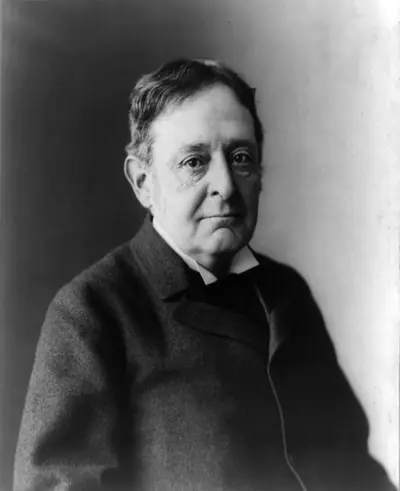
- Born: January 24, 1832
- Died: May 14, 1917
- Nationality:
- Profession: Politician
Joseph Hodges Choate was an American lawyer and diplomat. Choate was associated with many of the most famous litigations in American legal history, including the Kansas prohibition cases, the Chinese exclusion cases, the Isaac H. Maynard election returns case, the Income Tax Suit, and the Samuel J. Tilden, Jane Stanford, and Alexander Turney Stewart will cases. In the public sphere, he was influential in the founding of the Metropolitan Museum of Art.
