John M. Mason Quotes
The absence of God in the Constitution is an omission which no pretext whatever can palliate. Americans would “have every reason to tremble, lest the Governor of the universe, who will not be treated with indignity by a people more than individuals, overturn from its foundation the fabric we have been rearing, and crush us atoms in the wreck.
John M. Mason, 1770-1829, Presbyterian Minister, Quoted in Mother Jones, December 2005
Sourced by: Eigen's Political and Historical Quotations

Catholics were blamed by some for the defeat of Henry Clay in 1844. Anti catholic sentiment was high:. Johnson was then a Congressman representing a district where there were few Catholics and strong anti-Catholic feeling.


Opponents of the strict separation of church and state use this quotation to support their view. However, Story herein describes public sentiment, not what was passed and ratified in the Constitution and Bill of Rights. See {614309} and {614310} for his statements from the same work that show that there was no question in his mind but that church and state are separated by the Constitution and the First Amendment.


This proposal and others like it over the years have never even gotten out of Committee.


Dewey was opposing the concept of “released time” from the public schools for religious instruction.


In 1872 a proposed Constitutional amendment was debated throughout much of the country. The proposed “Christian Amendment” to the Constitution, recognized the Bible, God, and made Christianity the state religion requiring religious tests of public officials including belonging to an organized Christian Church. “Deists” as used then referred to people who had a general belief in a Supreme Being but did not belong to any formal or organized church.

This sura is interpreted by some Islamic fundamentalists as absolution for the killing of a non-Muslim by a Muslim. It was Allah who did it. In a greater sense, critics of Islam observe that many Muslims and Islamic nations have a double standard of responsibility for crimes. If the victims are Muslims, the normal standards of morality hold; but if a non-believer there can be no crime. Terrorism, torture, beheading, mass murder can all be done with a clean conscience if a Muslim takes this interpretation of this sura. Many Muslims however take an opposite point of view. These people do not have the concept of fatalism and lack of free will that others believe. There is a parallel to this problem in Judeo Christian countries although it is less common statistically. But the murder of physicians who perform abortions, and the Jewish radical fundamentalist who killed innocent Arabs at worship are examples of people who viewed themselves as instruments of God in their heinous activities.

See John Leland for opposition to this clause: {608955}
The official city seal at the time contained the Christian fish symbol.

This may just have been a note to himself of a draft that he decided not to send. As with today, the people who would feel aggrieved by not being allowed to have Congressional Chaplains are much more passionate about the issue than the those who see Chaplains as unconstitutional. Thus Chaplains remain.


This oath was even in force after the American Constitution was ratified and in effect. At the time, the Bill of Rights was not believed to be binding on the States—only on the Federal Government. Throughout American history there were many practices that were unconstitutional but were simply never litigated in the courts. Local community pressure often inhibited individuals from asserting their rights in the Federal Courts as did the expense. So, for most of American history local communities forced stores to close on Sunday. When the issue was finally taken to the Supreme Court, it was clear that such a practice was in violation of the First Amendment. Even in 2011, in Atlanta, it is “illegal” to buy beer on Sunday. When someone decides to litigate that, it will likely also be declared unconstitutional. The law not only discriminates against non Christians, but there are a few Christian sects which believe that Saturday is the Sabbath.


After being castigated by the Pope, Lameddais broke with the Church and concentrated on publishing and politics.

There was freedom of religion for Protestants in early New Jersey. Note that Catholics and Jews were not allowed to hold office. This constitution was in force until 1844 when the prohibition was repealed by new constitution. Under the original constitution, men were convicted for blasphemy. See {621063} .
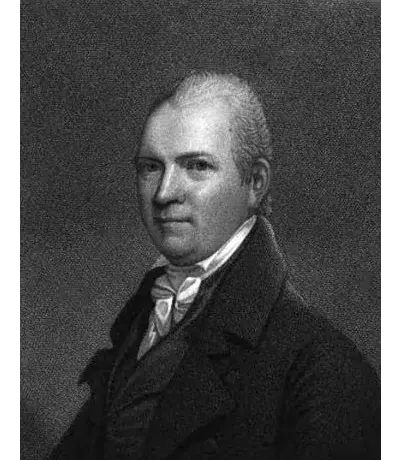
John Mitchell Mason was an American preacher and theologian who was Provost of Columbia College in the early 1810s, and briefly President of Dickinson College in Carlisle, Pennsylvania in the early 1820s.
