George McDuffie Quotes
The 40% tariff on cotton finished goods meant that the manufacturer actually invades your barns, and plunders you of 40 out of every 100 bales that you produce.
The Governor went about the state telling this to citizens to illustrate what the tariff was costing them. His arithmetic however was terrible and there was no such effect. There was an effect that Southerners had to pay more for manufactured goods like finished clothing and that was approximately equal to the tariff—in this case 40 percent. However, the Governor was telling his constituents that they were losing 40% of everything they had to the Manufacturers. The reality was that the 40 percent only applied to finished dresses, suits, or tools that Southerners might buy which might only be 10 percent of all the purchases of the farmer who spent most of his money for seeds, land, mortgages, livestock, food, and labor services. So the real cost was closer to 4 percent than 40 percent. And most women did their own sewing of clothing, and thus the real cost was even less than the 4 percent. It is not known whether the Governor knew himself that his argument was all wrong arithmetically and was taking advantage of the poor education and ignorance in South Carolina or he himself was not sophisticated enough to realize that he was in error. Nonetheless, most citizens of the state and many others in the state believed him. They opposed the tariff and gave it a derogatory name. See {592185}.
George McDuffie, 1790–1851, U. S. Congressman (Democrat, SC), Governor of South Carolina, Common speech against the Federal Tariff
Sourced by: Eigen's Political and Historical Quotations

In this case the tariffs were imposed not to protect national industries but to simply raise revenue. In the early years of the United States, almost all of the Federal Revenue was raised this way.


Despite developed nation calls for free trade, The US, EEC and Japan maintain an extensive system of agricultural subsidies which are politically difficult to eliminate while expecting developing nations to eliminate their protectionist practices.


Responding to the suggestion that he be a candidate for president:


Justifying high protective tariffs that would maintain high consumer prices:

He was one of the strongest English advocates of colonization of the New World

The issue of free trade verses protectionism has been with us throughout American history with national sentiments going one way and then later the other, only to come back and the cycle has gone on. Floyd was very modern in his economic views, so much so that he, even as a Southern politician, opposed slavery on the grounds that it was economically inefficient and the South would never develop industrially if it had no incentive, as existed in the North and England, to reduce the amount of labor required for economic opportunity. He was right on that point as well.

Ruffin is more widely known as the man who fired the first shot of the Civil War.


At the time, Republicans were the protectionists and Democrats were free traders—the reverse of the party roles at the end of the 20th century and the beginning of the 21st.
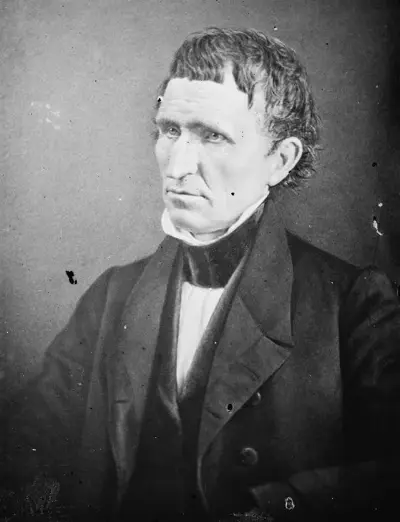
George McDuffie was the 55th Governor of South Carolina and a member of the United States Senate.
