Burgess Owens Quotes
That's what Democrats do best: breed black votes.
Owens, Burgess. Why I Stand: From Freedom to the Killing Fields of Socialism. Post Hill Press, 2018.


Ironically, for 100 years after the Civil War, it was the Democrats who tried to keep the Blacks from voting as until Franklin and Eleanor Roosevelt began to attract Negro votes, Blacks voted overwhelmingly Republican. In 1964 President Johnson, with bipartisan support overcame the Southern Democratic Filibuster and passed the Civil Rights Act and then the Voting Rights Act. The Republican leadership, sensing the Southern Democratic Anger at the Democratic Party Leadership, implemented their Southern Strategy and embraced the most racist Southern Democrats if they would switch parties. Most did quickly. Soon, almost all the conservatives had abandoned the Democratic Party. This made the Republican Party more conservative and soon liberal Republicans were extinct and by the end or the 20th century, most of the moderates were gone. With almost all of the worst racists in the nation becoming Republicans and being warmly welcomed by the Republican leadership, almost all Blacks became Democratic voters. Then the racist conservatives went back to their time-tested mechanisms for suppressing the Black vote—only this time it was for the benefit of the Republican party. Soon the non-racist Republicans, realizing that minority voter suppression could be an effective mechanism to offset the greater minority fertility rate, the increased voting rate of the young, and the alienation of many unmarried women to the more conservative Republican ideology, got behind voter fraud prevention—a more acceptable purpose for activities that coincidently could make it more difficult for minorities to register and vote. Those activities were what Judge Debevoise was referring to in this quotation.

A counter ethical argument says that voter suppression is ethically no different from gerrymandering, or having too few locations for voting, or voting on a Tuesday where poor people cannot often get to the polls with work and/or child obligations. For Republicans to suppress Black voting is only logical since such a high percentage of Blacks vote Democratic. It would be the same if Democratic legislatures could make it difficult for business executives to vote. It part of the rough and tumble reality of American politics.

The all white regular Mississippi Delegation was selected in elections where Blacks were barred from voting although Blacks were in the majority in Mississippi. In addition, the regular party was advocating obstructing the Supreme Court school integration decisions and the Civil Rights Act that had just been passed. See {637616}. The insurgent group was selected in integrated elections, contained black and white delegates, and was pledged to support and obey the laws. The President could not make the decision unilaterally, but had a great deal of influence.


The Republican party in the beginning of the 21st century had veered sharply to the right. Since the party controlled a many of Governor’s and state legislatures, some overly partisan people started passing laws and election rules that would inhibit the poor and minorities—who tended to vote Democratic—from voting. This was opposed by many of the traditional Republicans who had been national leaders over the years in expanding and facilitating voting.
The Black community and the Democrats had conducted a very successful voter registration drive and Preisse didn’t want them to have any further advantage. It is much easier for middle class and wealthy people to adjust their work schedules so that they can vote during the voting hours. Saturday voting, extending the voting hours and other means that would help the working person who cannot control his own time schedule would help voter turnout a great deal. But of the voters who would be assisted, the belief is that most would vote Democrat. As a result, Republicans tend to oppose making voting any easier and support any steps that can make it more difficult for the poor or the working class. However, the admission that the motivation was to keep Blacks from voting was terribly embarrassing to the Republican Governor and other party leaders. However, it was not embarrassing enough to extend the voting hours.
Preclearance was a requirement that any change in the voting or registration laws, rules or procedures needed to be approved by the Federal Justice Department.
He was explaining why preclearance was necessary. Preclearance was a requirement that any change in the voting or registration laws, rules or procedures needed to be approved by the Federal Justice Department.


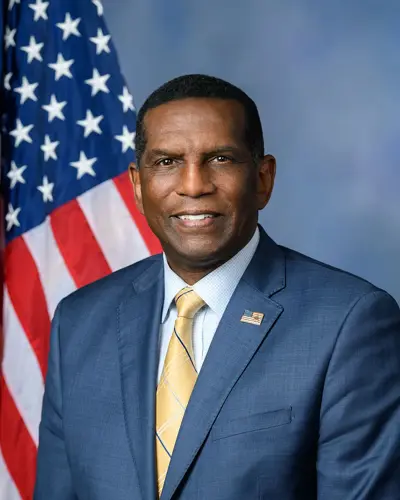
Clarence Burgess Owens is an American politician, non-profit executive and former professional football player serving as the U.S. Representative for Utah's 4th congressional district since 2021. He played safety for 10 seasons in the NFL for the New York Jets and the Oakland Raiders, winning a championship with the Raiders in Super Bowl XV in 1980. Since leaving the NFL, Owens has founded several businesses and is the CEO of a nonprofit dedicated to helping troubled and incarcerated youth. A Republican, Owens narrowly defeated incumbent Democrat Ben McAdams in the 2020 election. Owens, along with Byron Donalds, is one of two black Republicans in the House of Representatives.
