Lyndon B. Johnson Quotes
Here are people who murdered folks who were trying to help people get a chance to vote and you’re coming up here to recognize them as members of the Democratic Party when they won’t even say that they will support the nominee…
The all white regular Mississippi Delegation was selected in elections where Blacks were barred from voting although Blacks were in the majority in Mississippi. In addition, the regular party was advocating obstructing the Supreme Court school integration decisions and the Civil Rights Act that had just been passed. See {637616}. The insurgent group was selected in integrated elections, contained black and white delegates, and was pledged to support and obey the laws. The President could not make the decision unilaterally, but had a great deal of influence.
Lyndon Baines Johnson, 1908-1973, 36th President of the United States (Democrat, TX) Telephone call with Mississippi Senator James Eastland about whether the “regular” Mississippi delegates would be seated at the National Convention., 1964
Sourced by: Eigen's Political and Historical Quotations

This was passed AFTER segregated schools had been outlawed by the Supreme Court in Brown v. Board of Education and the 1964 Civil Rights Act had been passed.


Bruce was the first Black to complete a full term in the Senate


The Republican party in the beginning of the 21st century had veered sharply to the right. Since the party controlled a many of Governor’s and state legislatures, some overly partisan people started passing laws and election rules that would inhibit the poor and minorities—who tended to vote Democratic—from voting. This was opposed by many of the traditional Republicans who had been national leaders over the years in expanding and facilitating voting.

He was explaining why preclearance was necessary. Preclearance was a requirement that any change in the voting or registration laws, rules or procedures needed to be approved by the Federal Justice Department.


A counter ethical argument says that voter suppression is ethically no different from gerrymandering, or having too few locations for voting, or voting on a Tuesday where poor people cannot often get to the polls with work and/or child obligations. For Republicans to suppress Black voting is only logical since such a high percentage of Blacks vote Democratic. It would be the same if Democratic legislatures could make it difficult for business executives to vote. It part of the rough and tumble reality of American politics.


The Black community and the Democrats had conducted a very successful voter registration drive and Preisse didn’t want them to have any further advantage. It is much easier for middle class and wealthy people to adjust their work schedules so that they can vote during the voting hours. Saturday voting, extending the voting hours and other means that would help the working person who cannot control his own time schedule would help voter turnout a great deal. But of the voters who would be assisted, the belief is that most would vote Democrat. As a result, Republicans tend to oppose making voting any easier and support any steps that can make it more difficult for the poor or the working class. However, the admission that the motivation was to keep Blacks from voting was terribly embarrassing to the Republican Governor and other party leaders. However, it was not embarrassing enough to extend the voting hours.

Preclearance was a requirement that any change in the voting or registration laws, rules or procedures needed to be approved by the Federal Justice Department.


They were voting on ignoring the fraudulent vote count in Dallas County, Alabama. The counter argument was that it would disenfranchise those honest voters of the country whose votes would not then be counted.
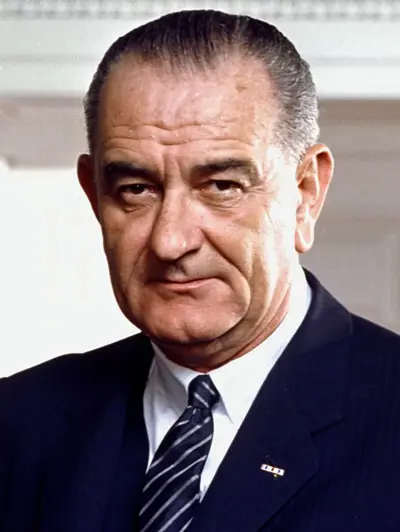
- Born: August 27, 1908
- Died: January 22, 1973
- Nationality: American
- Profession: President
Lyndon Baines Johnson, often referred to by his initials LBJ, was the 36th president of the United States, in office from 1963 to 1969. He served as the 37th vice president from 1961 to 1963 and assumed the presidency following the assassination of President John F. Kennedy. A Democrat from Texas, Johnson was also a United States representative and later majority leader in the United States Senate. Johnson is one of only four people to have served, at various times, in all four federal elected positions.
