Blanche K. Bruce Quotes
The evidence in hand and accessible will show beyond peradventure that in many parts of the State corrupt and violent influences were brought to bear upon the registrars of voters, thus materially affecting the character of the voting or poll lists; upon the inspectors of election, prejudicially and unfairly thereby changing the number of votes cast; and, finally, threats and violence were practiced directly upon the masses of voters in such measures and strength as to produce grave apprehensions for their personal safety and as to deter them from the exercise of their political franchises.
Bruce was the first Black to complete a full term in the Senate
Blanche K. Bruce, 1841-1898, U. S. Senator (Republican, MS), U. S. Register of the Treasury, Senate Speech, March 31, 1876
Sourced by: Eigen's Political and Historical Quotations

They were voting on ignoring the fraudulent vote count in Dallas County, Alabama. The counter argument was that it would disenfranchise those honest voters of the country whose votes would not then be counted.

The all white regular Mississippi Delegation was selected in elections where Blacks were barred from voting although Blacks were in the majority in Mississippi. In addition, the regular party was advocating obstructing the Supreme Court school integration decisions and the Civil Rights Act that had just been passed. See {637616}. The insurgent group was selected in integrated elections, contained black and white delegates, and was pledged to support and obey the laws. The President could not make the decision unilaterally, but had a great deal of influence.


The Republican party in the beginning of the 21st century had veered sharply to the right. Since the party controlled a many of Governor’s and state legislatures, some overly partisan people started passing laws and election rules that would inhibit the poor and minorities—who tended to vote Democratic—from voting. This was opposed by many of the traditional Republicans who had been national leaders over the years in expanding and facilitating voting.

The Black community and the Democrats had conducted a very successful voter registration drive and Preisse didn’t want them to have any further advantage. It is much easier for middle class and wealthy people to adjust their work schedules so that they can vote during the voting hours. Saturday voting, extending the voting hours and other means that would help the working person who cannot control his own time schedule would help voter turnout a great deal. But of the voters who would be assisted, the belief is that most would vote Democrat. As a result, Republicans tend to oppose making voting any easier and support any steps that can make it more difficult for the poor or the working class. However, the admission that the motivation was to keep Blacks from voting was terribly embarrassing to the Republican Governor and other party leaders. However, it was not embarrassing enough to extend the voting hours.


For a later version of this “advice” see Josh Billings {594820}

In the election Karzai won by such a large proportion that it is doubtful that the improper activities were responsible for the victory. Surprising to many observers was that Dr, Jalal actually got over 1 percent of the vote.


He had won the previous election but the old ruler and dictator, Robert Mugabe, refused to relinquish power. After massive economic boycotts that hurt the nation badly, Tsvangirai and Mugabe agreed to a power sharing model where Tsvangirai would be the prime minister but Mugabe would be president with the military, police, and justice departments reporting directly to the President, so Tsvangirai ended up as no more than a figure head. He and his followers reasoned that at the next election Mugabe would be ousted. But Mugabe with the police and military did not allow Tsvangirai to campaign in the rural areas where Mugabe had most of his voting strength. And then on the day of the election, Mugabe’s henchmen disenfranchised over 1 million voters in the cities where Tsvangirai had his voting strength. So Tsvangirai could not improve in the country side and his vote count in the cities was much less than previously, so Mugabe claimed to have won the election.
Preclearance was a requirement that any change in the voting or registration laws, rules or procedures needed to be approved by the Federal Justice Department.
He was explaining why preclearance was necessary. Preclearance was a requirement that any change in the voting or registration laws, rules or procedures needed to be approved by the Federal Justice Department.


The Republican Presidential Candidate in the Election of 2016, Donal;d Trump, when with only a few weeks to go before Election Day, and the polls indicated that he was substantially behind, began to give speeches that included many statements that the Election was rigged against him. See Quotation 643708 as an example. He presented no evidence at all, and even could not specify who was doing the rigging or how they were doing it. However, many of his followers, who tend to believe many political conspiracy theories, started to make plans for continual action after the election if Trump[ loses. For some unstable followers—all candidates for President have some—they were already planning methods of resisting if Hillary Clinton should win. To make matters worse Trump had encouraged his supporters to take extra legal action to prevent Hillary Clinton from destroying the country as they ave known it. He also announced that he would not necessarily accept the election results if Clinton won. He even threatened to have her jailed when he won the Presidency. Chertoff, a fellow Republican, was very familiar with unstable people and their oft times dangerous behavior to “protect” them, their family and the nation from some conspiracy or another. Chertoff and many other Republican leaders tried to persuade Clinton to refrain from such demography, but Trump was one of those people who tended not to listen to advisors or colleagues. He continued on his dangerous rhetorical path.


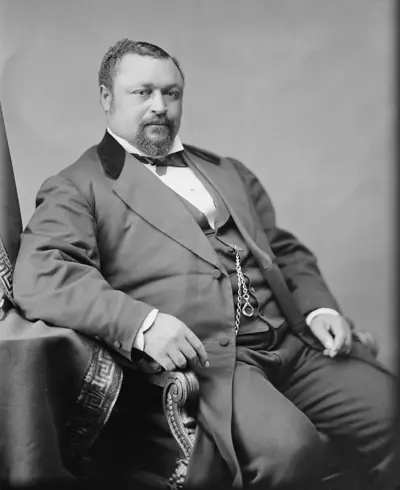
Blanche Kelso Bruce was born into slavery in Prince Edward County, Virginia and went on to become a politician who represented Mississippi as a Republican in the United States Senate from 1875 to 1881. He was the first elected African-American senator to serve a full term (Hiram R. Revels, also of Mississippi, was the first African American to serve in the U.S. Senate but did not complete a full term).
