George Mason Quotes
That the people have a right to uniform government; and, therefore, that no government separate from, or independent of the government of Virginia, ought to be erected or established within the limits thereof.
Mason, George. "The Virginia Declaration of Rights." 12 June 1776. The Papers of George Mason, 1725-1792, edited by Robert A. Rutland, vol. 1, University of North Carolina Press, 1970, p. 289.


L. P. Jacks


Note that Jefferson felt that governmental powers were limited even without a constitution.


Surprising to most Americans today, at that time, the Governors controlled the State militias, and in this case two Governors refused to make their militias available for the war effort. This experience and others led to the change which today allows the Federal Government to “call up” the National Guard of any state regardless of the desire of the State Governor.


He had no authority to do this. He just took it upon himself. This was one of the incidents which caused later Congresses to pass very strict laws limiting the authority of all Federal Military and other intelligence and police forces so that they have little or no authority within the United States. President Lincoln did not allow the order to stand, although he repudiated it very delicately and as privately as possible. Many in his own party strongly favored this proclamation as it cracked down on the Southern Rebels and emancipated slaves—both objectives of many Republicans. In addition, Fremont was very popular with the people and had strong political connections. (He would later run for President.) See {635739}.


While this may have been true in some European nations, many disagree completely with this assertion for America. They point to the thousands of laws passed by Congress to cut back or diminish the power that they had earlier given the agency. These counter-examples to Hayek’s view are particularly evident after most wars. What often does happen is that Congress votes a temporary power to a government agency, and when the temporary power time is coming to an end, many citizens and officials are so happy with the result of granting the power, that the power is then granted permanently, sometimes to the distress of some legislators who voted for the power with the understanding that it would be temporary. However, Congress may, and often does, change its collective mind. Coercion to Hayek includes for example, taxation if there are criminal penalties for failure to pay the tax or regulation where a government agency may require or prohibit certain behavior of a business or individual and most people would agree that even in a democracy there are coercive aspects of much government activity.


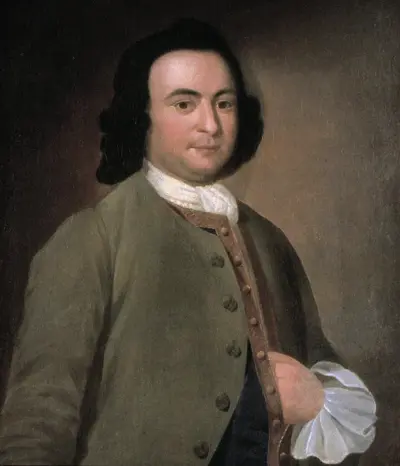
George Mason IV was an American planter, politician and delegate to the U.S. Constitutional Convention of 1787, one of three delegates who refused to sign the Constitution. His writings, including substantial portions of the Fairfax Resolves of 1774, the Virginia Declaration of Rights of 1776, and his Objections to this Constitution of Government (1787) opposing ratification, have exercised a significant influence on American political thought and events. The Virginia Declaration of Rights, which Mason principally authored, served as a basis for the United States Bill of Rights, a document of which he has been deemed a father.
