Grover Cleveland Quotes
That sir is a matter of too great importance to discuss in a five minute interview, now rapidly drawing to a close.
See Canadian Prime Minister Kim Campbell for a less elegant attempt to do the same thing.
Grover Cleveland, 1837-1908, 22nd & 24th President of the United States (Democrat, NY), Response to a difficult question at a critical time, 1884 campaign
Sourced by: Eigen's Political and Historical Quotations


Commenting on media criticism of her:

Many politicians attempt to use the media to twist events so that they favor their program or party and attack any journalist who questions their version of reality or the truth. Although most journalists will let interviewees have their say without any comment, there are a few who take Koppel’s point of view.


Ailes suggested plan was not implemented by President Nixon. However. Ailes, an arch conservative who has always believed the media was biased against conservatism, later implemented his idea very successfully. This idea was the intellectual forerunner" to Fox News, which Ailes launched as a "fair and balanced" news network in 1996. The Nixon Administration however, concerned about the extremes of many of his recommendations finally fired him, which turned out to be very positive for Ailes career thereafter.


The term baits was a traveling term meaning to stop for rest or refreshment, hence to travel slowly.


At the time there was no Secrecy & Classification System nor any laws enforcing secrecy or confidentiality. However there was no freedom of information laws of expectations even on the part of journalists. This was the first Freedom of Information policy of the American government. Some politicians were more open than others but there was no national, governmental before this. There were however leakers and whistleblowers though the terms were not in use. Note that Roosevelt herein created the first whistle blower protection—himself.

This quotation illustrates two things. First, Mrs. Roosevelt always donated the fees and royalties from her books, newspaper column and radio shows. Second, it seems incredible to us today, that this first lady organized the social schedule of the White House, wrote a daily newspaper column for years, authored a number of books, and had her own radio show—all while she was First Lady. She had the additional role of traveling about the nation, observing and giving speeches and press conferences as a proxy for FDR whose polio handicap made traveling very difficult. She also wrote or orally reported to her husband the material aspects of each of her trips, although she was so open that he and everyone else could read about it in the newspapers. She did all this with a staff of only 2 people. There has probably been no one in the history American politics, perhaps other than Thomas Jefferson, who was so busy and productive.

And the New York press is probably the most difficult and cynical in the world.

Haldeman had actually called the network executives on several occasions regarding Cavett’s show. Nixon was particularly furious when Cavett interviewed John Kerry, the decorated soldier who had thrown his medals away in protest to the handling of the Vietnam War. Nixon wanted some stronger actions taken.


McCarthy was in many ways like Donald Trump. One was taht the press loved to cover his statements and accusations that were so absurd and sensational that they sold a lot of nespapers, magazines and obtained many TV / Radio viewers/listeners. As a result he got much more media coverage that he warranted in teh view of many, President Dwight Eisenhower, who generally would not even mention McCarthy's name was percieved by Adlai Stephenson and many others as weak and fearful of McCarthy, Tannenhous and some other historians believed that fear had nothing to do with it, but that Eisenhower not only chose this as a deliberate strategy, but one that was quite effective.

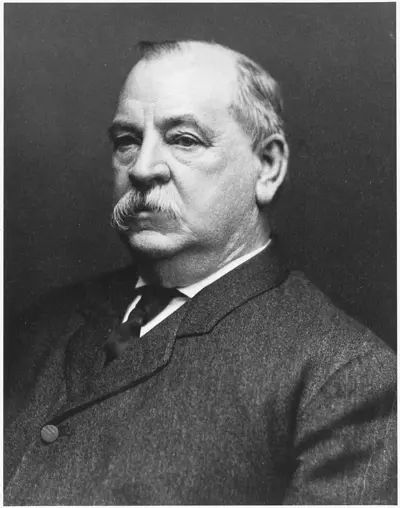
Stephen Grover Cleveland was an American politician and lawyer who served as the 22nd and 24th president of the United States from 1885 to 1889 and from 1893 to 1897. Cleveland is the only president in American history to serve two nonconsecutive terms in office. He won the popular vote for three presidential elections—in 1884, 1888, and 1892—and was one of two Democrats (followed by Woodrow Wilson in 1912) to be elected president during the era of Republican presidential domination dating from 1861 to 1933.
