Jose Ortega y Gasset Quotes
That Marxism should triumph in Russia, where there is no industry, would be the greatest contradiction that Marxism could undergo. But there is no such contradiction, for there is no such triumph. Russia is Marxist more or less as the Germans of the Holy Roman Empire were Romans.
Ortega y Gasset, José. The Revolt of the Masses. W. W. Norton & Company, 1932, p. 147.


This quotation illustrates White’s favorable view of Russia. Note his use of the “it works” phrase which he picked up from Stefens’ famous quote {634892}. At the time the Soviet Union had been perceived by many economists to have been a great economic improvement over Czarist Russia. And over all, Russia which in 1917 was an economic basket case, had become one of the stronger states in Europe although the Russian people paid a horrendous price. Most historians agree that White passed classified information to the Russians. He was accused of being a Communist, but there was never any evidence of that. Some people believe that he was a spy for the Russians and committed espionage, but others disagree observing that White was very much his own man and felt that much information that was classified never should have been. White substituted his own judgment, it is believed, about what could be given to the Russians for the security system. He was an admirer of what Russian socialism had accomplished economically, educationally and medically since the 1917 revolution deposing the Czar. Russia had been a valuable military ally, which had taken the brunt of both military and civilian casualties in WWII. White’s economics were certainly not Marxist but very much Keynesian. He was subpoenaed by the House Un-American Activities Committee where he was accused of being a Communist which he denied (see {634907}). He died of a heart attack 3 days later.


Vladimir Lenin. While Lenin was of this view, Stalin and other hard liners disagreed. They not only imposed their brand of communism on their own people via force with terrible consequences for any dissidents, but the Soviet Army imposed Communism on most of the states of Eastern Europe, and those states in turn used their Armies and secret police to impose it on their own citizens.


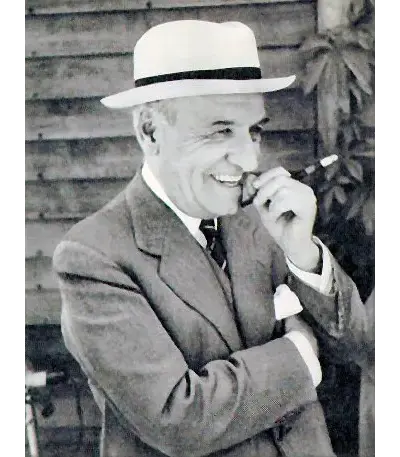
José Ortega y Gasset was a Spanish philosopher and essayist. He worked during the first half of the 20th century, while Spain oscillated between monarchy, republicanism, and dictatorship. His philosophy has been characterized as a "philosophy of life" that "comprised a long-hidden beginning in a pragmatist metaphysics inspired by William James, and with a general method from a realist phenomenology imitating Edmund Husserl, which served both his proto-existentialism (prior to Martin Heidegger's) and his realist historicism, which has been compared to both Wilhelm Dilthey and Benedetto Croce."
