Hillary Clinton Quotes
That is what I want to make clear today. A man with a long history of racial discrimination, who traffics in dark conspiracy theories drawn from the pages of supermarket tabloids and the far, dark reaches of the Internet, should never run our government or command our military.
Clinton, Hillary. "Remarks in Reno, Nevada." The American Presidency Project, 25 Aug. 2016.


Negro volunteers were actually preferred under the theory that their ancestry made them more immune to malaria and other tropical diseases in Cuba.

Perhaps there is no more dramatic quotation illustrating MacArthur’s arrogance where his own views and decisions should obviously prevail regardless of the policies of his superiors and his commander-in-chief. The army had been officially integrated by President Truman, The reality was that the general honestly believed that he had no superiors among the military, that civilians should not control the military, and in any event that the President—Truman—was not fit to be Commander-in-Chief.

Interestingly, before 1705, there was no legislative prohibition against Indians and Free Negroes being full citizens including holding public office and voting. This act prohibited them from holding public office, but did not prohibit them from Voting provided they met the general voting requirement of being a landholder. However, 18 years later, voting by these minorities was no longer allowed. See Quotation 643588.

This is an excellent example of the kind of rhetoric that was used against the Japanese immigrants to America in the 1930s. There was a rumor that the Japanese laborer, in addition to working for less wages what white labor were getting, was a spy for the Japanese Emperor, It was this kind of prejudice and conspiracy theory that led the government to intern Japanese—even citizens on the West Coast—an act that was ignominiously upheld but he Supreme Court and latter apologized for by several American presidents. It turned out that there was not a single Japanese immigrant who engaged in any kind of spying or sabotage in WWII and many fought in the Armed forces and were amongst the most decorated soldiers. One irony of the West Cast internment is that Japanese immigrants and American citizens living on the East cost were no so interned. The fear of invasion was not as great and the history of anti Japanese prejudice as in this quotation was not as prevalent. There are some historians who argue that one of the major motivations of to intern the Japanese was for some wealthy whites to be able to get their land—especially farmland—which since they could not work, they could not pay the taxes and a huge amount of prime land changed hands as a result of the internment.

After the Civil War and Reconstruction, the American nation was still bitterly divided intelelctually, socially, emotionally and poliotically. In an effort to bring more unity to America, most of the power stucture and the influentials of the nation began to avoid those issues that would divide North and South and try and promote a narrative that both sides might be able to live with. And this is what Zeitz describes in this quotation. America went through a period of Revisionist History that even in the 21st century was held by many people. It wasn't until the middle of the 20th century that the real history and narrative of the Civil War and Reconstrution emerged from the few academics who had all along criticized the fabricated narritive that did unify the country at the cost of historical accuracy and truth. Many scholars point out that the price that America paid for this unity was the Jim Crow era and a century of legalized racism. Much of the nation was built on the labor of Negro slaves and the victims of the slavery era, also bore the brunt of American unity and reconcilliation.


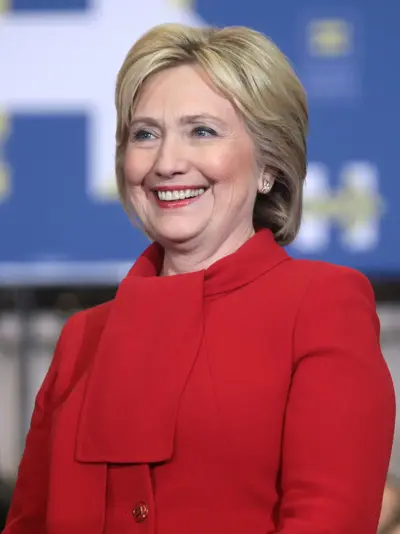
Hillary Diane Rodham Clinton is an American politician, diplomat, lawyer, writer, and public speaker who served as the 67th United States secretary of state from 2009 to 2013, as a United States senator from New York from 2001 to 2009, and as First Lady of the United States from 1993 to 2001. Clinton became the first woman to be nominated for president of the United States by a major political party when she won the Democratic Party nomination in 2016. She was the first woman to win the popular vote in an American presidential election; however, she failed to win the Electoral College.
