Frantz Fanon Quotes
Taking the continent as a whole, this religious tension may be responsible for the revival of the commonest racial feeling. Africa is divided into Black and White, and the names that are substituted- Africa south of the Sahara, Africa north of the Sahara- do not manage to hide this latent racism. Here, it is affirmed that White Africa has a thousand-year-old tradition of culture; that she is Mediterranean, that she is a continuation of Europe and that she shares in Graeco-Latin civilization. Black Africa is looked on as a region that is inert, brutal, uncivilized - in a word, savage.
Fanon, Frantz. The Wretched of the Earth. Translated by Constance Farrington, Grove Press, 1963, p. 161.


Clay supported the relocation of freed slaves to Liberia through the American Colonization Society.


Reconstruction was the period in the South after the Civil War. The change that emancipation brought to the white South was traumatic, and there was a constant struggle between those who wanted the Blacks to be integrated into Southern Society—and those Southerners who wanted to create a society that would be as close to slavery as possible, So the Klu Klux Klan and other terrorist organizations formed and with lynching and other intimidation, much of the initial progress of Reconstruction was rolled back and did not get reinstated until the Civil Rights and Voting Rights Acts were passed in 1964.
Charleston was in the Southern part of the state where most people supported slavery. Douglas made an unequivocal pitch for the racist vote {600060} and forced Lincoln to take a stand. Like many politicians today, Lincoln decided to give the audience what they wanted to hear. It is not clear whether or not he ever believed this statement or was just pandering in a political campaign. He had never said this in the Northern part of the state of before. Lincoln’s views on race changed and matured over the years, culminating in the Emancipation Proclamation. Lincoln lost the Senate seat to Douglas.


Referring to Montgomery Alabama in 1950.


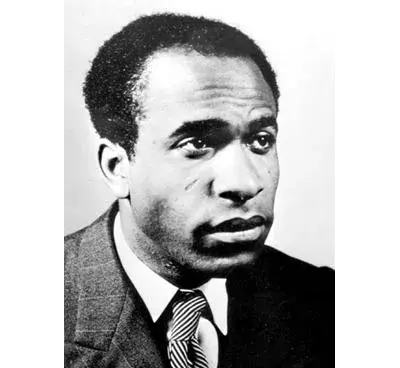
Frantz Omar Fanon, also known as Ibrahim Frantz Fanon, was a French West Indian psychiatrist and political philosopher from the French colony of Martinique (today a French department). His works have become influential in the fields of post-colonial studies, critical theory and Marxism. As well as being an intellectual, Fanon was a political radical, Pan-Africanist, and Marxist humanist concerned with the psychopathology of colonization and the human, social, and cultural consequences of decolonization.
