Gerry Spence Quotes
Susan Boggs, a black runaway interviewed in Canada in 1863, said of the religious slave masters: 'Why the man that baptized me had a colored woman tied up in his yard to whip when he got home that very Sunday and her mother . . . was in church hearing him preach. He preached, You must obey your masters and be good servants.- That is the greater part of the sermon, when they preach to the colored folks. . . .'
Spence, Gerry. From Freedom to Slavery: The Rebirth of Tyranny in America. St. Martin's Press, 1993.


Observation of the other fugitives in Canada

In never occurred to him that he and his family were also adverse to the backbreaking stoop labor of cotton picking.


Duchess of Bedford. In 1853, during a visit to England, Harriet Beecher Stowe was presented with a petition containing the signatures of over a half million British women asking for an end to American Slavery. It was in 26 bound volumes. The backing of the prestigious Duchess and so many other English women had a profound effect on American Women and the growing strength of the Abolition movement.

The sexual exploitation of female slaves by the slave owner and/or his relatives was a phenomenon about which most Southerners were in denial. Light skinned and even white babies, born to Negro slaves was fairly common. The gross immorality was so great that it was too painful for most Southerners – especially white females to even contemplate much less discuss. At the same time, the abolitionists had to be very careful that to raise this problem as delicately as possible lest the lost their audience with such gross and indelicate behavior. This quotation was particularly artfully phrased.

See {642028} & {642029} for another quotation relating to this terrible abuse.
_0_thumbnail_47x47.jpg "Etienne de Perier, governor of French Louisiana.")
In 1729 the French colony of Louisiana was under attack by Indians resentful of the whites making plantations on their traditional land. The Governor armed 15 Negro slaves who were marvelous soldiers and were material in the defense of the colony—better than many of the whites. Ironically, the price of slaves was so high at the time otherwise the government would buy them for a professional militia. Later in Louisiana and throughs the South the intellectual box that the racism of Southern slavery produced would not allow the possibility that Negroes could be good soldiers, and even when the South was desperate for military manpower in the civil War, they would not accept a proposal from Robert E. Lee and others that slaves by armed and allowed to fight for the South in exchange for their freedom.


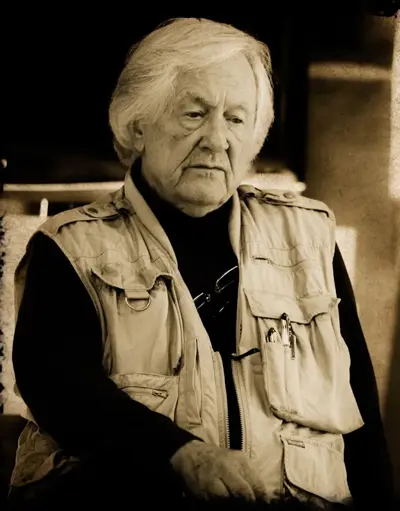
Gerald Leonard Spence is a semi-retired American trial lawyer. He is a member of the American Trial Lawyers Hall of Fame. Spence has never lost a criminal case either as a prosecutor or a defense attorney, and has not lost a civil case since 1969.
