Book of Timothy Quotes
Suffer not a woman to teach, nor to usurp authority over the man, but to be in silence.
This Biblical passage has been frequently used to justify discrimination against women.
New Testament, 1 Timothy 2:12
Sourced by: Eigen's Political and Historical Quotations

This is one of the biblical passages which cause some Christian Fundamentalists to prescribe a secondary and subjugated role for women. Also the view that women, like children, should be seen and not heard. Also it supports those who object to women in the ministry or the priesthood or in senior teaching positions. See {587063}. It is useful to note that much of Islam which preaches a similar view of females, probably learned it from Christianity which preceded Islam by almost 600 years.

Ferrer was the last public figure to be executed in Europe for heresies like this.

Puglia was an anti feminist. The stoa was the city square where men commonly congregated and discussed politicis.

Within Christianity there has been a continual debate regarding a woman’s proper role in society in general and in church affairs in particular. This quotation is often used to justify a husband’s dominant role over the wife. Also it supports those who object to women in the ministry or the priesthood. See {587062}. It is useful to note that much of Islam which preaches a similar view of females, probably learned it from Christianity which preceded Islam by almost 600 years.

Golden was one of the leading theater producers of the 1920s and 1930s. There is even a theater on Broadway named after him. This statement reflects a common attitude of the late 1930s of even many educated people. A few like Eleanor Roosevelt saw such a statement for what it was—ridiculous and responded publicly – {636785} . Note that for many years, this was a self-fulfilling statement. Producers like Golden thought women could not be great playwrights and therefore would never produce a play authored by a woman. Then others would use the fact that there were no even good plays that were written by female authors as evidence of the act that women could not be great playwrights.


Despite this pronouncement which kept Caliphs from being female, modern Islamic states (Pakistan, Indonesia) have had female Presidents.


The Greek culture was quite sexist. However, all cultures had observed strong women, some who ruled and others where wives or mistresses of rulers were very influential if not powerful.

Marcus Porcius Cato. This quotation has had two different interpretations over time. One was that women if they received equality of treatment and voting would have an advantage for they also had their traditional “feminine wiles” and their sexuality, hence would dominate men. The second was a also a warning but based on the fact that women were superior in many ways, and given an equal chance, would excel men. The later interpretation is argued by some who point to the 2011 American data that shows more females than males graduating from high school and college, and females outnumber males in medical, law and several other professional schools. With the exception of a few Roman men, most heeded Cato’s warning and never took a chance on female equality.
In Bedouin society women may not own land or cattle.

Nixon did however make some minor appointments of females. One irony of this statement is of all the Presidents in American history, he was probably the most erratic and emotional.

She is vehemently opposed to allowing women to serve in the armed forces.

SNCC had been formed to promote equality, but race and class were the issues, not gender. Many of the women left SNCC and proceeded separately to start a women’s movement.
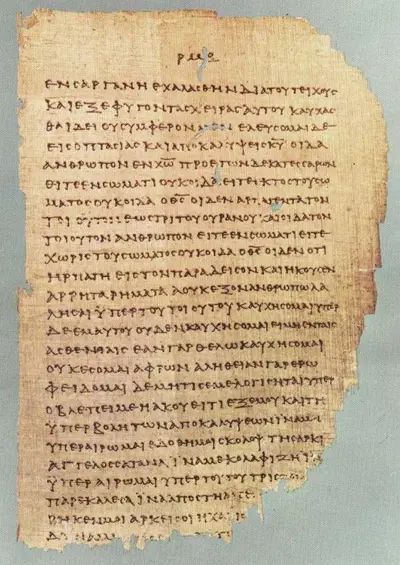
The pastoral epistles are a group of three books of the canonical New Testament: the First Epistle to Timothy (1 Timothy) the Second Epistle to Timothy (2 Timothy), and the Epistle to Titus. They are presented as letters from Paul the Apostle to Timothy and to Titus. They are generally discussed as a group (sometimes with the addition of the Epistle to Philemon) and are given the title pastoral because they are addressed to individuals with pastoral oversight of churches and discuss issues of Christian living, doctrine and leadership. The term "pastorals" was popularized in 1703 by D. N. Berdot and in 1726 by Paul Anton. Alternate nomenclature for the cluster of three letters has been proposed: "Corpus Pastorale," meant to highlight the intentional forgery of the letters as a three-part corpus, and "Letters to Timothy and Titus," meant to emphasize the individuality of the letters.
