Walter Lippmann Quotes
Successful democratic politicians are insecure and intimidated men. They advance politically only as they placate, appease, bribe, seduce, bamboozle, or otherwise manage to manipulate the demanding and threatening elements in their constituencies.
Walter Lippmann, 1889-1974, Political Columnist, The Public Philosophy, 1955
Sourced by: Eigen's Political and Historical Quotations


Many critics of the neoconservatives like Perle observed that if we were negotiating with friends and allies and they made demands or exacted a high price for what we wanted, this was viewed as diplomacy and give and take was appropriate. But when states which were not friends and whose government we did not approve of, made demands or exacted a high price for what we wanted, this was viewed as “blackmail” and should never be acceded to. Negotiations with those states those became extremely difficult if neoconservatives were controlling or influencing the negotiating tactics and strategy.


The Netherlands at that time had a representative republic, but whenever there were troubles, there were many who urged the appointment of a strongman—usually a prince or other noble. In the Dutch republic at the time, de Witt was the Chief Executive, but under their constitution, he could do little without the approval of the parliament. A strong leader with dictatorial powers was called for as there was little experience with a democratic republic and people did not have confidence that governance in a crisis was possible without dictatorial powers lodged in one man. Even in America, there tends to be more power taken by the presidency in time of war and other crises. So the fear and the argument has not changed in almost 400 years.


That is not terribly different from other democracies including the United States.

He anticipated the problems of emerging democracies in Africa, Asia, South and Central America. This speech was given in the early days of WWII when it was far from clear that we would win.


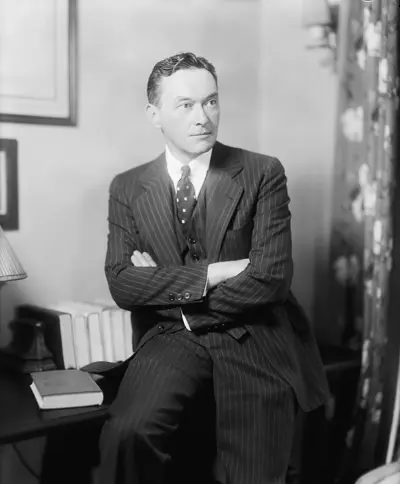
Walter Lippmann was an American writer, reporter and political commentator. With a career spanning 60 years he is famous for being among the first to introduce the concept of Cold War, coining the term "stereotype" in the modern psychological meaning, as well as critiquing media and democracy in his newspaper column and several books, most notably his 1922 book Public Opinion.
