Aristotle Quotes
Special care should be taken of the health of the inhabitants, which will depend chiefly on the healthiness of the locality and of the quarter to which they are exposed, and secondly on the use of pure water; this latter point is by no means a secondary consideration. For the elements which we use the most and oftenest for the support of the body contribute most to health, and among those are water and air. Wherefore, in all wise states, if there is want of pure water, and the supply is not all equally good, the drinking water ought to be separated from that which is used for other purposes.
Aristotle. Politics. Translated by Benjamin Jowett, Clarendon Press, 1885, p. 226.


1st Earl of Beaconsfield. In the United States, President Theodore Roosevelt shocked the major business interests when he proposed regulating food and other government quality assurance of the private marketplace. Many Americans saw this as an overdue reform. One of the reasons was that Prime Minister Disraeli had advocated government regulation a quarter of a century earlier with statements like this quotation.
This was a new idea for most Americans at the time. A century later, there were still a few politicians who did not accept this idea.


Manava Dharma Shastra. This text is a part of the Hindu Holy Texts. Hindus believe that Manu was a prophet whose text is revealed or inspired. This is one of the earlier prescriptions to maintain public health.


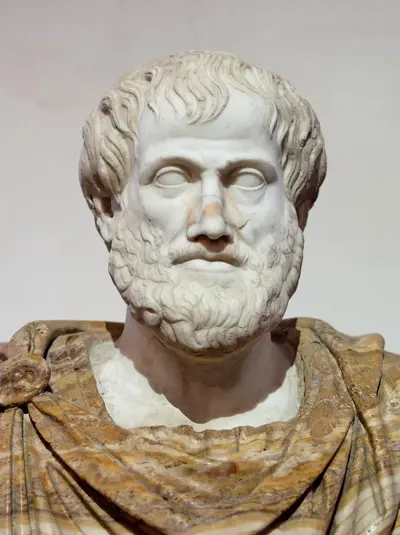
Aristotle (/ærɪˈstɒtəl/; Greek: Ἀριστοτέλης Aristotélēs, pronounced [aristotélɛːs]; 384–322 BC) was a Greek philosopher and polymath during the Classical period in Ancient Greece. Taught by Plato, he was the founder of the Lyceum, the Peripatetic school of philosophy, and the Aristotelian tradition. His writings cover many subjects including physics, biology, zoology, metaphysics, logic, ethics, aesthetics, poetry, theatre, music, rhetoric, psychology, linguistics, economics, politics, meteorology, geology and government. Aristotle provided a complex synthesis of the various philosophies existing prior to him. It was above all from his teachings that the West inherited its intellectual lexicon, as well as problems and methods of inquiry. As a result, his philosophy has exerted a unique influence on almost every form of knowledge in the West and it continues to be a subject of contemporary philosophical discussion.
