Aristotle Quotes
Some persons hold that, while it is proper for the lawgiver to encourage and exhort men to virtue on moral grounds, in the expectation that those who have had a virtuous moral upbringing will respond, yet he is bound to impose chastisement and penalties on the disobedient and ill-conditioned, and to banish the incorrigible out of the state altogether. For (they argue) although the virtuous man, who guides his life by moral ideals, will be obedient to reason, the base, whose desires are fixed on pleasure, must be chastised by pain, like a beast of burden.
Aristotle. Nicomachean Ethics. Translated by H. Rackham, Harvard University Press, 1926, p. 631.


Romulus Whitaker personally killed his brother.

In Russia at the time, serfs were little better off than slaves. Not only did they have to obey their landlords in all things, but any who advocated disobedience on their part were beaten and sent to Siberia. Exile to the Siberian Gulags was not an invention of the Communists of the 20th century although they used that punishment in unprecedented numbers. It was used by the Czars and the Empress.

Gordon himself was killed shortly thereafter by the Madhi’s followers at the siege of Khartoum. Ahmed died soon thereafter. Although Ahmed was an extreme religious fanatic, and a skillful leader, he was not a terrorist.


The speech was in the midst of a very bitter strike where goons and strikebreakers assaulted miners and a few miners resorted to violence.

This verse has been one of the bases of Muslim theocratic states like Iran’s claim to legitimacy. The word “govern” is sometimes translated as “judge.” In the context of the 6th century, there were no separation of powers as we know them and judging, governing and legislating were melded.

In 1877 Wasburn was dropped from the List of Ministers by the Unitarian Church. He had become quite atheistic.


government appointed officials and bureaucrats Savonarola was a very hated ruler, opposed to any kind of a Parliament or assembly. And the penalty for advocating for a Parliament was severe. The Signoria were the various government appointees and clerks. They were influential in Florence and hence they were silenced by the mot draconian methods. There was a movement throughout Italy for parliaments and less arbitrary government. Savonarola was particularly strict in his rooting out sin and cruel in his punishments and hence very unpopular. He was also under the delusion that God himself had called on him to preach his strict version of morality. Some of the Nobles reached the Pope with many of Savonarola’s extreme statements and Savonarola was excommunicated and burned as a heretic. His executioner gloated that he was burning Savonarola before the powerful priest could burn him as he had done so many others.


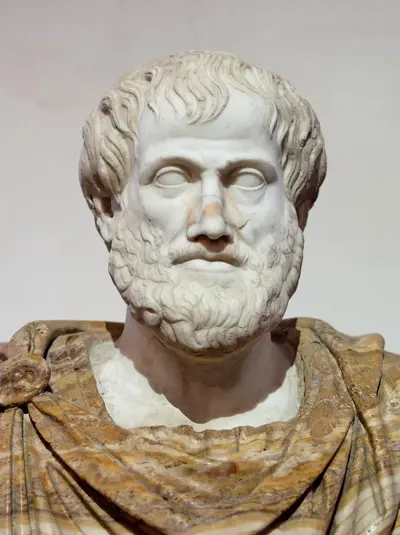
Aristotle (/ærɪˈstɒtəl/; Greek: Ἀριστοτέλης Aristotélēs, pronounced [aristotélɛːs]; 384–322 BC) was a Greek philosopher and polymath during the Classical period in Ancient Greece. Taught by Plato, he was the founder of the Lyceum, the Peripatetic school of philosophy, and the Aristotelian tradition. His writings cover many subjects including physics, biology, zoology, metaphysics, logic, ethics, aesthetics, poetry, theatre, music, rhetoric, psychology, linguistics, economics, politics, meteorology, geology and government. Aristotle provided a complex synthesis of the various philosophies existing prior to him. It was above all from his teachings that the West inherited its intellectual lexicon, as well as problems and methods of inquiry. As a result, his philosophy has exerted a unique influence on almost every form of knowledge in the West and it continues to be a subject of contemporary philosophical discussion.
