George Herbert Quotes
Harken to reason or shee will bee heard.
Herbert, George. Jacula Prudentum; or, Outlandish Proverbs, Sentences, etc. London, T. Maxey for T. Garthwait, 1651.


the love of reason and intellectual pursuits carried Islam scholarship to the highest levels until “reason” was limited by the fundamentalist religious leadership, both in scope and methodology, to that which was consistent with a narrow view of Islam and the world. Then decline and stagnation took over and drove most of the Islamic world to its present state.

Romulus Whitaker personally killed his brother.


This is a modern summary of the philosophy of Benedict Spinoza who developed the modern philosophical foundation of science and scientific thinking. When the authorities are clerics and religious leaders, their authority gets undermined which is why the Jews, Christians, and Muslims all excommunicated Spinoza. For the scientists, they themselves are to be rejected as determiners of knowledge and truth so they tend to do poorly in political disputes because the good scientists would never assert a belief that the politicians should listen to them just because they are great scientists and they “know.” It is the ideologues and junk scientists who are sure of their testimony and can advise with certainty. See linked quote(s).


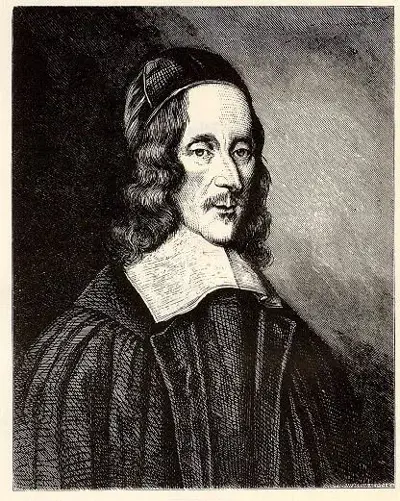
George Herbert was a Welsh-born poet, orator, and priest of the Church of England. His poetry is associated with the writings of the metaphysical poets, and he is recognised as "one of the foremost British devotional lyricists." He was born into an artistic and wealthy family and largely raised in England. He received a good education that led to his admission to Trinity College, Cambridge, in 1609. He went there with the intention of becoming a priest, but he became the University's Public Orator and attracted the attention of King James I. He served in the Parliament of England in 1624 and briefly in 1625.
