Ayn Rand Quotes
Reason is not automatic. Those who deny it cannot be conquered by it. Do not count on them. Leave them alone.
Rand, Ayn. Atlas Shrugged. Random House, 1957.


the love of reason and intellectual pursuits carried Islam scholarship to the highest levels until “reason” was limited by the fundamentalist religious leadership, both in scope and methodology, to that which was consistent with a narrow view of Islam and the world. Then decline and stagnation took over and drove most of the Islamic world to its present state.


Spinoza was one of the most feared intellectuals in human history—feared that is by the established power structures. He is the only known person who was excommunicated by the Catholics, the Jews and the Muslims—all were forbidden to read his works. He was the enemy of authority and advocated personal reason as the guide for men.


This is a modern summary of the philosophy of Benedict Spinoza who developed the modern philosophical foundation of science and scientific thinking. When the authorities are clerics and religious leaders, their authority gets undermined which is why the Jews, Christians, and Muslims all excommunicated Spinoza. For the scientists, they themselves are to be rejected as determiners of knowledge and truth so they tend to do poorly in political disputes because the good scientists would never assert a belief that the politicians should listen to them just because they are great scientists and they “know.” It is the ideologues and junk scientists who are sure of their testimony and can advise with certainty. See linked quote(s).


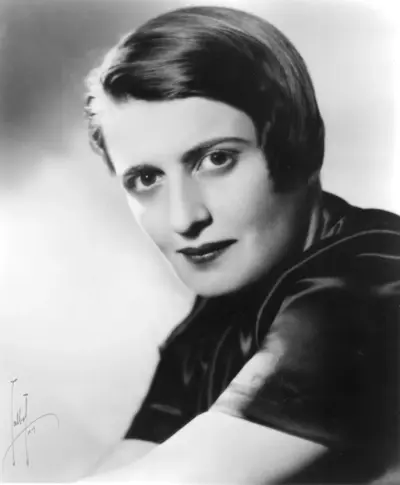
Ayn Rand was a Russian-American writer and philosopher. She is known for her two best-selling novels, The Fountainhead and Atlas Shrugged, and for developing a philosophical system she named Objectivism. Born and educated in Russia, she moved to the United States in 1926. She had a play produced on Broadway in 1935 and 1936. After two early novels that were initially unsuccessful, she achieved fame with her 1943 novel, The Fountainhead. In 1957, Rand published her best-known work, the novel Atlas Shrugged. Afterward, she turned to non-fiction to promote her philosophy, publishing her own periodicals and releasing several collections of essays until her death in 1982.
