William Rawle Quotes
Some of the state legislatures appear to have viewed the relative duties of the senators whom they have appointed, in a more restricted light than it is apprehended the Constitution implies. It seems to have been supposed that the senators were bound to obey the directions of the state legislatures, and the language of some resolutions has been, that the senators be "instructed," and the members of the house of representatives from the particular states "requested," to make or support certain propositions. But surely the opinion is erroneous. A senator is no more bound to obey the instructions of the state legislature, in opposition to his own judgment, than a representative of the people in the other house, is bound by the occasional instructions of his constituents. They are both elected for the purpose of freely and honestly exercising their own judgments according to the best of their capacities.
Until relatively recently, Senators were elected by state legislatures and not directly by the voters. The state legislatures who elected the senator often felt that they had a right to “instruct” the Senator how to vote on issues. Today there are many votes a Senator makes that are opposite from what the Senator’s state legislature might wish.
William Rawle, 1759–1836, Attorney & Constitutional Scholar, A View of the Constitution of the United States, 1825
Sourced by: Eigen's Political and Historical Quotations


The Chairmen of the Committees then had tremendous, almost unilateral power. The chairman reached seniority by being elected over and over and had little opposition. At the time they were almost all older Democratic Congressmen from the "Solid South", very conservative and still racists despite the 1964 Civil Rights Act. They were outraged when a Freshmen member of Congress who rarely made a public statement, took on the most powerful members of the House and wanted to reform the Seniority. But Ms. Chisholm was a teacher in her professional life, and by challenging the seniority system and attracting the enmity of most of the Chairmen, the media and the public started to cover the dispute and Chisholm explained to America exactly how the system worked and how undemocratic and racist it was. Her effort put the Seniority System on the public agenda, and reforms evolved over the next decades." She was the first Black woman to be elected to Congress and was the first Black woman to actively campaign for the Presidency


This proposed Constitutional Amendment was debated just before Abraham Lincoln would take office. The South wanted to tie his hands on the Slavery issue, and wanted to end what had become a constant polarized Congressional debate over slavery. Of course, their idea of ending the debate was to Constitutionally prohibit further attempts to outlaw or otherwise interfere with slavery in the Southern states. A number of Northern members of Congress voted for it realizing that there was little or no chance of obtaining the ratifications of ¾ of the states and they wanted to buy some time for the Southerners to calm down over their fear of Lincoln and his upstart Republican party. The Amendment never obtained the needed votes though a few states did ratify it. Secession and the Civil War mad the amendment moot. The Southern position was so rigid, that they would compromise in no way on the slavery issue, and ended up of course losing more than they ever thought was possible by succeeding. Another reason this proposed amendment is historically important, is that it is yet another strong piece of evidence that the issue of the Civil War was slavery and not differences in political and economic philosophies as many Southerners have claimed since then. If States Rights in general were the great concern, would have been no reason to single out slavery if it were not the major issue. Yet the last phrase, “including that of persons held to labor or service by the laws of said State” does just. Similar evidence is given by the Secession Resolutions of the Southern States and the debates around them. It is clear that slavery was the issue that the South fought over.

This Pinkney view prevailed in the original Constitution, but this practice was reversed by the 17th Amendment of 1913. The source for this statement is the notes of Alexander Hamilton.


She was being interviewed about the fact that Senator Tammy Duckworth had just given birth, but the then Senate Rules prohibited her from bringing the infant onto the floor of the Senate.


At the time, most members never read the bills they voted on, though some tended to read earlier versions. The bills were very long—sometimes as long as 2000 pages. Usually a few members of Congress worked with Congressional Staffs and lobbyists to finalize bills. It was believed that the lobbyists were the only people who read the entire bills in all their versions.
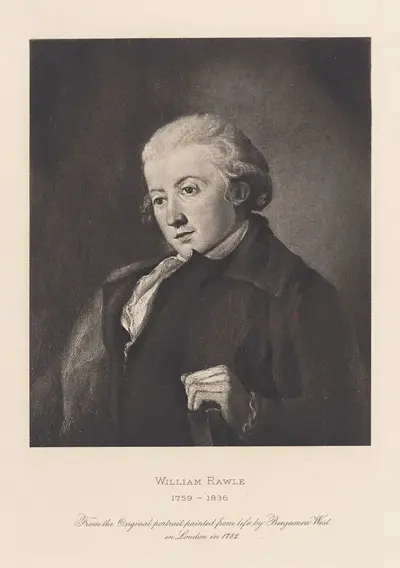
William Rawle was an American lawyer in Philadelphia, who in 1791 was appointed as United States district attorney in Pennsylvania. He was a founder and first president of the Historical Society of Pennsylvania, president of the Pennsylvania Abolition Society, and for 40 years a trustee of the University of Pennsylvania.
