Edmund Burke Quotes
Some decent regulated pre-eminence, some preference (not exclusive appropriation) given to birth, is neither unnatural, nor unjust, nor impolite.
Burke, Edmund. Reflections on the Revolution in France. J. Dodsley, 1790, p. 74.


Describing Secretary of State James Baker:


Eggleston was an accomplished writer who had served in the Confederate army of the Civil War. 20 year after the war he wrote a series of articles for the prestigious Northern Atlantic Monthly trying to convey the war from the Southerner’s point of view.

Here we have a very mockery of the concept of aristocracy and “good family”. This humorous essay was written less than a decade after Darwin published his first treatise on evolution. Here a witty American essayist and critic is giving an insight into the thoughts of the many people who either were scandalized by the concept of human evolution or honestly could not grasp such a new intellectual set of concepts. Many of the great scientific intellectual breakthroughs spread with stunning rapidly—usually amongst scientists, but in the case of evolution to most intellectuals and men of letters, they could use Darwin’s framework and observe evidence of evolution all over. So here, less than 10 years from the inception of evolutionary theory among English scientist, we have American non-scientific literati reading articles in the general (albeit sophisticated) Atlantic Monthly with a semi-serious, semi-comical, analysis of the thinking of people who resisted what had become in just a few years obvious truth to America’s leading intellectuals (except for most of the leading intellectual theologians who would take longer to accept evolution, but, with the exception of the extreme fundamentalists, most did.

Chivalry was a set of rules that regulated the behavior of knights especially as to their behavior in battle. It was the Medieval equivalent of the Geneva Convention. At the time knights fought against knights and peasants fought against peasants. After time the fighting was mixed. Previously, if a knight was subdued by other knights, he would surrender and promise to fight any more and that would be honored. But when a small group of peasants brought down a knight in armor, he could not surrender. He had probably killed other lightly armored peasants who were friends, and the peasants did not trust the knights. So typically, the peasants just killed the fallen knight. Social class determined the concepts of honor, fairness, trust, and chivalry came to an end.


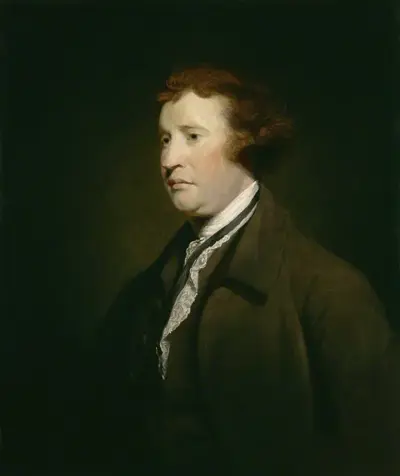
Edmund Burke was an Irish statesman, economist, and philosopher. Born in Dublin, Burke served as a member of parliament (MP) between 1766 and 1794 in the House of Commons of Great Britain with the Whig Party after moving to London in 1750.
