Simon Newcomb Quotes
So far as the economic condition of society and the general mode of living and thinking were concerned, I might claim to have lived in the time of the American Revolution.
Newcomb, Simon. The Reminiscences of an Astronomer. Houghton, Mifflin and Company, 1903, p. 2.


The simplistic view that the American colonists were patriots and the British were the colonizers against whom the colonists revolted is not really accurate. The American colonists were polarized into patriots and loyalists. The Loyalist Americans ranged from many of those merchants whose business depended upon England, those whose family were still in England, those whose religion made them loyal to the Church of England, slaves who would be free under British law, Americans who had strong cultural and intellectual ties to England and those Americans who were great believers in monarchy and whose honor required that they fulfill the oath that they had taken to the King of England. Some of the worst atrocities of the American Revolution occurred in the battles of these Americans against each other. See {82105} for more on this point.


This was not exactly a complement. Adams was outraged by Paine’s overt and public atheism and anti religious statements. (See {623040}.) Others of the founding fathers were also atheists but Paine wrote publicly and actively tried to persuade people of his religious position. Adams was particularly concerned because Paine was not just one of the great leaders of the American Revolution. His was the most recognized name, and a huge percentage of the American population had read his Common Sense. He was the person who was most persuasive with the mass of Americans to revolt—more so than Jefferson, Washington, Madison, Franklin or any of the other great men of the time. Because Paine was so influential, Adams thought that he should be more passive in shaking the religious faith of so many others. Actually, it was Paine’s overt atheism that has tended to diminish his influence and status given by historians throughout the ages. It also caused him some difficulty in America after the Revolution and moreso in England.


Today, most Americans know little of Samuel Adams but see John Adams as a much larger and more important figure. But for the American Patriots fighting the Revolution, it was Sam Adams who made the most outstanding contributions to the political strategy and leadership.

This is a very interesting quotation. A contemporary historian tells us how rapidly the American colonists organized when Parliament passed the Tea Tax. Even with the Internet and social media it would be hard to organize representation from 13 states that fast today. The word of mouth and mail of the day was surprising to most of us. The passion on the issue and the public interest must have been extraordinary. Ramsay was the first major historian of the American Revolution.
Mechanics was a general term for people who made things, or fixed things. Ramsay was the first major historian of the American Revolution.


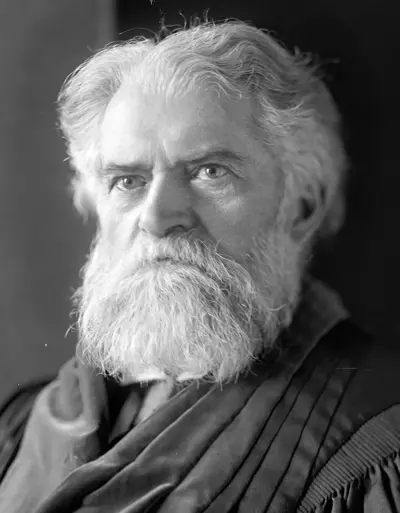
Simon Newcomb was a Canadian–American astronomer, applied mathematician, and autodidactic polymath. He served as Professor of Mathematics in the United States Navy and at Johns Hopkins University. Born in Nova Scotia, at the age of 19 Newcomb left an apprenticeship to join his father in Massachusetts, where the latter was teaching.
