William H. Seward Quotes
Sir, there is no Christian nation, thus free to choose as we are, which would establish slavery.
Seward, William H. The Works of William H. Seward. Edited by George E. Baker, vol. 1, Redfield, 1853, p. 73.


Baldwin was a young lawyer at the time. He represented a shipload of ex-slaves who had taken over their Spanish slave ship and landed in America. The Spanish claimed, the ship owners and some of the crew all claimed the “property.”

His family was one of the wealthiest in Rhode Island. He called in the entire family and he formally read the deed. The family itself had actually been active in the slave trade under John, his oldest brother, so this deed was very shocking to them. Moses became a leading abolitionist in Rhode Island and John the major defender of slavery in the state. Despite that, the brothers actually remained close.


Though Leo XIII was very much opposed to slavery, his claim that the Catholic Church “from the beginning” sought to end slavery overlooks the inconsistent reality of several of his predecessors’ teachings. For an example of this inconsistency one may find a relevant example as late as the 19th century, see the teachings of Gregory XVI {611428}, Pius IX {612304}, and Leo XIII {611844}

American Catholic bishops were divided during the Civil War over the slavery question. For a bishop’s view opposing abolition of slavery, see Hughes {611579}.


This was a remarkable public statement for its time. No other political leader of an Islamic country would dare claim that people have a right to be atheists. Very few would even suggest that people should be free to choose their own religion.

America’s first political economist


Although some Arab nations such as Saudi Arabia maintained legal slavery into the 1960s, Tunisia’s Emancipation pre-dated that of the United States.

Prior to Vatican II, freedom of conscience was not explicit in Catholic Doctrine. The controlling view had been that of Pope Pius IX a hundred years earlier. See {612299}.


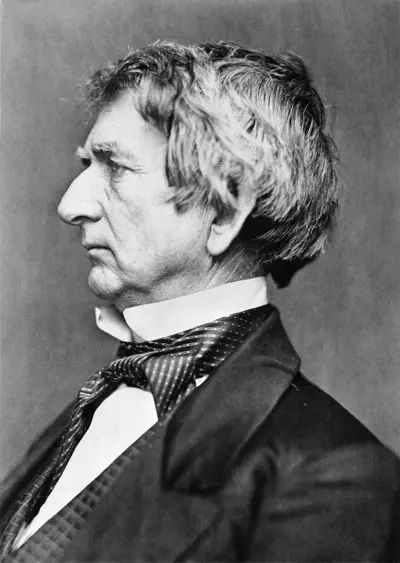
William Henry Seward was United States Secretary of State from 1861 to 1869, and earlier served as governor of New York and as a United States Senator. A determined opponent of the spread of slavery in the years leading up to the American Civil War, he was a prominent figure in the Republican Party in its formative years, and was praised for his work on behalf of the Union as Secretary of State during the Civil War.
