Charles Cornwallis, 1st Marquess Cornwallis Quotes
Sir, I have the mortification to inform your Excellency that I have been forced to give up the posts of York and Gloucester, and to surrender the troops under my command, by capitulation on the 19th inst. as prisoners of war to the combined forces of America and France.
General Cornwallis was informing his superior that he had surrendered at Yorktown. The French navy had prevented escape or resupply from the sea, and the British were totally surrounded by American and French land forces.
Charles [Marquis] Cornwallis, 1738-1805, British General, Letter to Sir Henry Clinton, York Town, Virginia, October 20, 1781
Sourced by: Eigen's Political and Historical Quotations


After the war Donitz was found guilty of Unrestricted Submarine Warfare and using thousands of slave laborers in his shipyards. He was sentenced to 10 years, one of the lightest sentences if the German War Crimes Trials.


The Kaiser, facing a revolution, instructed Groener to use the army to put down the revolution. The Kaiser had to abdicate and the German Republic was born, soon to fall to the Nazis.

Note that he assumes that not only will there be another World War, but he assumes that we will be on opposite sides.

The French Revolution was out of control and terribly bloody. Most Americans and even English who supported the principles and reasons for the French revolution ceased their support because of the Reign of Terror. Jefferson, however, saw a link between France and American democracy and was reluctant to end support.

The note was found in an abandoned Japanese camp on Bataan. There are some who believe that this note was a forgery. However, most think it genuine as it reflected one of the Japanese
“aces in the hole” to defend against an allied invasion of the Japanese mainland. It was one of the reasons that some American planners advocated use of the Atomic Bomb. Of course that was a real risk of using the bomb. The Japanese might be so angry and feel morally abused and kill the many allied prisoners they had. Many thought it was a lesser risk because it did not have the symbolic animus that foreigners occupying the Japanese homeland had. The quotation illustrates the amazing complexity that the American and allied leadership faced trying to end WWII in the Pacific.

Each day the German Airforce was sending air assaults over England. The English defenders were shooting down 2 Germans for every English plane lost. The British however were running out of pilots. Both sides were terribly weakened. However it was the Germans who cracked and called off the air assault prelude to the planned invasion of England.


He was absolutely right, but Hitler paid him no heed. See {631290} for his suggested course for Germany.

1776 at the Battle of Bunker Hill This was the first formal battle of the American Revolution. The British officers perceived the American colonials as a rag-tag collection of men with no experience or skill at arms. Looking for glory they led from the front and if nothing else the Colonials were superb marksmen who picked the officers off easily. After that battle, British officers were more prudent and respectful of the revolutionaries.

The CIA and others had known that the Vietnam War was not winnable, yet the CIA Management and the Defense Department were stating the contrary. Gates was then an analyst for the CIA and it was his first job out of college. There was a rationale for the politicians and military leaders to lie about prospects in Vietnam. If we could not win, we wanted to negotiate a settlement on as good terms as we could get. However, if Ho Chi Min and the North Vietnamese knew that we did not think that we could win, they would have no incentive to concede on any points or compromise at all. To be successful in the negotiations, we had to persuade the Vietnamese that we thought we could win and would keep up the fighting and bombing unless they would concede some things. Unfortunately, by the time that we started negotiations, it was too late to be very successful in negotiations. All the parties to the negotiations at that point realized that we could not win. The only people who thought the contrary were a large block of American patriots who had been deceived by the politicians and the military leadership.

Fox was one of the opposition leaders who were opposed to the heavy handed policies that the British King and Government had used.


This was the first contact between the colonists and the French government. The French agent was very non committal and the parties were just feeling each other out. Franklin made it perfectly clear that the colonists would not trade the English King for a French one and become part of the French empire.


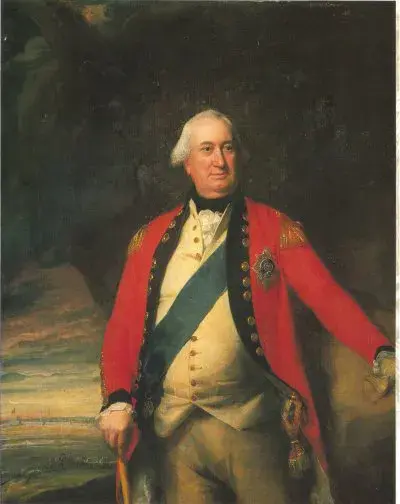
Charles Cornwallis, 1st Marquess Cornwallis, KG, PC, styled Viscount Brome between 1753 and 1762 and known as the Earl Cornwallis between 1762 and 1792, was a British Army general and official. In the United States and the United Kingdom he is best remembered as one of the leading British generals in the American War of Independence. His surrender in 1781 to a combined American and French force at the siege of Yorktown ended significant hostilities in North America. He later served as a civil and military governor in Ireland, where he helped bring about the Act of Union; and in India, where he helped enact the Cornwallis Code and the Permanent Settlement.
