Oliver Goldsmith Quotes
Silence gives consent.
Goldsmith, Oliver. The Good Natur'd Man. W. Griffin, 1768, p. 28.


The Civil Rights Act of 1964 was bitterly opposed in the senate by Southerners who had filibustered continuously. After months of debate a critical cloture vote was taken against a Senate tradition which had never voted cloture on a civil rights filibuster. Every vote was critical. Senator Engle was dying from a brain tumor, and could not walk or speak. When the vote for cloture was taken, Engle was wheeled into the Senate chamber, and in what may have been the most eloquent, poignant, creative vote in Senate history, pointed to his eyes. The vote was recorded as:. The Aye's narrowly won. The Civil Rights Act of 1964 became law.


1st Earl of Beaconsfield
In 1986 many scientists opposed the wisdom and feasibility of the administration's Strategic Arms Initiative. The director suggested that scientists who opposed government policies not be given government research grants. There was much protest about this seeming infringement of freedom of speech:

Operations were performed without any anesthetics in those days. The operation failed and Garfield died of infection.

He was the first medieval jurist to write opinions on cases, thus preserving a record for openness and an instrument to teach others and produce uniformity of decisions and judgments—the basis of most legal systems today. This quotation is a principle of most modern legal systems today.


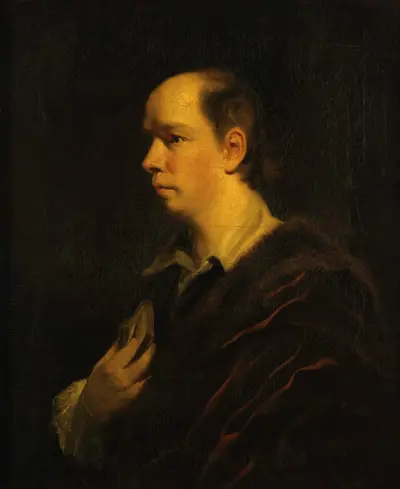
Oliver Goldsmith was an Anglo-Irish novelist, playwright and poet, who is best known for his novel The Vicar of Wakefield (1766), his pastoral poem The Deserted Village (1770), and his plays The Good-Natur'd Man (1768) and She Stoops to Conquer (1771, first performed in 1773). He is thought to have written the classic children's tale The History of Little Goody Two-Shoes (1765).
