George Orwell Quotes
Several of them would have protested if they could have found the right arguments.
Orwell, George. Animal Farm. Secker and Warburg, 1945, p. 54.


After returning from church one Sunday, Coolidge’s wife asked him what the sermon was about and in his usual taciturn manner, he replied, “Sin.” His wife asked for details about what the preacher specifically said and this was his answer.


Conant was also one of America’s premier scientists why had served on all the government policy committees about the atomic bomb development and use. He was the only scientist who had the respect of the greatest of the scientists and also was a respected government administrator with the confidence of the politicians. The “super” was the name then for the Hydrogen Bomb, a logical next step that could be taken according to the laws of physics. However J. Robert Oppenheimer and the Atomic Energy Commission General Advisory Committee he was chairing voted unanimously to NOT develop the Hydrogen Bomb at the time. The feeling was that if we did, the Russians would feel that they too would have to also, and their physicists were estimated to be easily capable of doing it. They thought that we could easily build more atom bombs—enough to wipe out Russian civilization if they attempted to use any of the atomic weapons they had built. The Chairman of the AEC and some other civilian officials who did not really understand the science but were they thought knowledgeable about international power politics, wanted to go ahead and build the “super” which Edward Teller had recommended and led the very few scientists on that side of the issue. The civilian hawks’ logic was that the Russians were so inferior to the United States that they could not have developed their atomic capability without having the information from their spies who had penetrated out program. If we built a supply of hydrogen weapons, they argued, the Russians could never gain parity if we maintained proper secrecy. They were not good enough scientists. Therefore we would dominate the world and could contain communism. Conant and most other American scientists knew that the Russians could develop supers and then we would be in a scientific arms race which in all probability we would not win every stage. Better they thought to have a stand off. However, the AEC Chairman started a campaign to destroy Oppenheimer’s credibility with the public as he was the public face of American Physics. The scientists lost the worst fight in American history between politicians and scientists. Conant, himself was appointed to literally be the peacetime ruler of West Germany and had a brilliant success there, but he was unable to stop the super development after Oppenheimer had been publicly castigated as a security leak. The Russians then developed their hydrogen weapons and the arms race continued throughout the Cold War as most of the scientists thought it would.

The only soldier ever so honored. Marshall was then the Deputy Chief of Staff of the Army. The President was meeting with the Army leadership to plan the nation’s preparedness to come with the Nazi menace. Army brass had wanted to build up large ground forces. However, conservatives (in those days opposed to military spending) accused the Roosevelt administration of fomenting war. FDR wanted to be less visible and opted for a program that would build 7 aircraft factories first and later build ground forces. He asked if all agreed and the army heads all bobbed except for Marshall, then a relatively junior general. FDR never forgot the one general who told him, No, and when War was eminent, he selected Marshall lead the military and promoted him over 34 more senior generals. Great leaders appreciate people who have the courage and integrity to say No to power and FDR had the confidence in himself that he could handle people who disagreed or were difficult. This was one of FDR’s many great appointments.


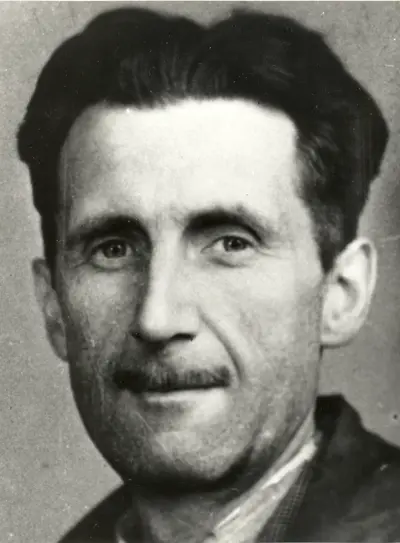
Eric Arthur Blair, known by his pen name George Orwell, was an English novelist, essayist, journalist and critic. His work is characterised by lucid prose, biting social criticism, opposition to totalitarianism, and outspoken support of democratic socialism.
