Robert H. Jackson Quotes
Segregation is nearing an end. If there are two or three deaths on this court, this will come. There is no way out.
Quoted in the Court’s notes of the meeting. At the time the justices were split 5-4 with the majority reluctant to overturn segregation. They tended to be much older and from the South. Jackson was prescient. Shortly thereafter Chief Justice Vincent passed away and Earl Warren replaced him. The 5-4 majority was for desegregation now. However, Warren negotiated with the minority and finally produced a unanimous opinion against legal segregation. As Jackson had predicted, “it had come.”
Robert Houghwout Jackson, 1892-1954, U. S. Attorney General (Democrat), U. S. Supreme Court Justice, Legal Conference of the Justices on the Issue of School Segregation, 1952
Sourced by: Eigen's Political and Historical Quotations

This article was written after the successive Supreme Court decisions on June 5, 1950 that found segregation in certain cases unconstitutional.

In the middle of WWII where Black soldiers were fighting and dying on the war front, there were fears of racists that the Blacks would return and demand full equality and an end to segregation. There were threats in the South of armed attacks against any returning serviceman who would push for desegregation.


Quoted in the Court’s notes of the meeting

Arkansas Governor Faubus ordered the national guard to prevent Black students from integrating Central High School in Little Rock. President Eisenhower was a man of action and not rhetoric and his lack of firm public statements overlooked an opportunity to use the Presidential “bully pulpit” and exercise his moral leadership and authority. Armstrong was irate at Eisenhower for appearing to do nothing and say nothing. See {615852}. When Eisenhower did enforce the court order and used Federal troops, Armstrong sent him this congratulatory telegram. His reference to walking into the schools was in support of many who suggested that the best thing the President could have done was to personally take one of the Black students by the hand and walk into the school with him or her. With the mood of the Southern racists, such an act was potentially very risky for the President and it is not known whether of not the President and his staff ever considered such an act.

Jessie Helms was his young assistant who drafted this race baiting ad. There are two vicious but subtle aspects to this kind of attach ads. First, not that the ad does not address the problem of white men working along side of blacks. It only refers to wives and daughter. This interracial sex innuendo played on and increased the fear of whites that Blacks would commonly rape white women. The second nasty aspect of the ad is the specific attack on the opponent. Instead of saying that he favored desegregation, the phrase “mingling of the races” was used which implied that Graham was in favor of biracial intermarriage and children—again another sex innuendo. When integration of the workforce finally occurred in the South, there was no increase in Black men sexually assaulting white women. There has been a substantial increase in racial intermarriage however as racial bigotry has diminished in America.


This was of course in addition to their moral position as taught by their religions.


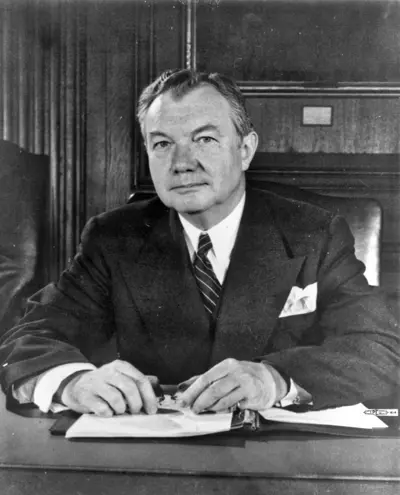
Robert Houghwout Jackson was an American attorney and judge who served as an Associate Justice of the United States Supreme Court. He had previously served as United States Solicitor General and United States Attorney General, and is the only person to have held all three of those offices. Jackson was also notable for his work as Chief United States Prosecutor at the Nuremberg trials of Nazi war criminals following World War II.
