Pierre Teilhard de Chardin Quotes
Science, philosophy and religion are bound to converge as they draw nearer to the whole.
Teilhard de Chardin, Pierre. The Phenomenon of Man. Harper & Row, 1959, p. 30.


This Quatrain amazingly preceded Tennyson’s expression of the same idea by almost 1000 years. See {620306}. At the time this was written Islam was entering the flower of its intellectual height where one could express doubt and be a religious dissident and not be murdered or even censored in many Muslim communities. At that time Islamic science, mathematics, philosophy, and literature was well in advance of Christian Europe. However, a hundred years later, the Islamic world went through a “Closing” where all new ideas became suspect and the religion and culture became stultified and Europe advanced while the Islamic world ceased its creative intellectual development.


3rd Earl Russell of Kingston

Song of the Lord


First Astronomy, then Geology, proved that the Creation that was described in the Bible was not literally correct. To religious fundamentalists who believe that every word of the Bible is the word of God or the word of those inspired by God, the only possibility of conclusion is that the science is wrong. To the extent that undermining the word of God is not acceptable to the fundamentalists, they have used every power—including the criminal law power of the state to stop the blasphemy and discredit the scientist. In 1856, there was a much larger proportion of fundamentalists in the Western World than there is today. By 2012, the vast majority of these same populations have rejected Christian Biblical Fundamentalism, and no longer attack science for its affect on religion. The minority of fundamentalists, however, are vehement in their opposition to science.

Spinoza’s ideas were considered so radical and dangerous that he was the only man in history who was excommunicated by the Catholics, the Jews and the Muslims.


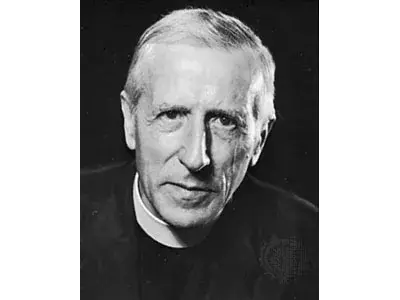
Pierre Teilhard de Chardin SJ was a French Jesuit priest, scientist, paleontologist, theologian, philosopher and teacher. He was Darwinian in outlook and the author of several influential theological and philosophical books.
