Paul Keating Quotes
Russia alone has the capacity to obliterate the United States.
O'Brien, Kerry. Keating. Allen & Unwin, 2015.


The U. S. and Russia


This quotation is very important in helping to understand the 1950s in America with respect to nuclear weapons policy. McCormick was one the better educated, sophisticated, and influential Americans. Yet he appears to be a technological and nuclear ignoramous. Most people had not yet realized that atomic weapons were not just much larger traditional bombs. They could do terrible damage, but it would always be localized they thought. Chicago might be destroyed but the people out of range would be OK. He never got it that a dirty bomb could be dropped on Detroit and depending on which way the wind is blowing could wipe out Chicago and much of the Midwest as well. He knew nothing of the genetic effect the radiation, nor the implications for the environment of maintaining a large nuclear manufacturing industry. He and many like him did not realize that after the first bombs were created, how easy it would be for the Russians and others to also develop a nuclear arsenal. And 50,000 warheads was just a matter of effort. The implications of these things would inhibit our carrying out his and others ideological views of foreign policy. Oppenheimer and most nuclear scientists explained all this, but believing them and acting on those beliefs would have been too much of a change.


We face that situation now. Tesla was one of the great American immigrant scientists. He found in America the kind of intellectual and operational freedom that did not exist in the rigid, monarch-controlled, Austro-Hungarian Empire. He developed patents and techniques that formed the technological bases of radio, telephone long distance, TV, cell phones, Wi Fi, just to name a few. Most important he was Thomas Edison’s great nemesis. Edison invented DC electric generators that could power factories or entire streets in a neighborhood. Tesler invented and developed AC electrical technology which could power entire cities and he could move electricity over long distances which Edison could not. Tesler was one of the first scientists to conceive of and try to implement “Big Science” where there were huge capital investments to develop machines and systems to do what had never been done before—philosophically like the CERN Hadron Collider. Tesler even convinced a large corporation to finance the construction of a massive building and tower so he could experiment with the wireless transmission of electricity. However, as the industrial democracies have learned, Big Science can only be funded by governments and it often takes sever working in consort to afford the huge investment that is required. In Tesler’s era, the federal and state governments did not fund scientific research so his work was not only technically ahead of his time but also conceptually. He anticipated most of the problems and need for a national power grid that was challenging America even at the beginning of the 21st century.


Trieste was occupied by the British and Americans theoretically, but Tito’s Yugoslavian troops had done most of the WWII fighting and dying in the area and wanted control for the Russian Allies of which Tito was then one. There were frequent armed standoff’s of Anglo Americans and Yugoslav troops that could easily have evolved to full scale fighting. Nine months later, Tito broke with Stalin. An interesting historical fact is that Richard M. Nixon was one of the Congressional Delegation then visiting Trieste.


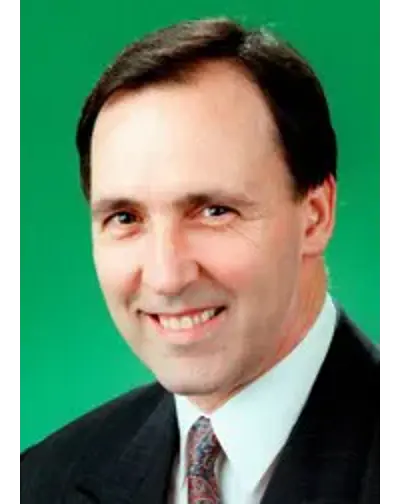
Paul John Keating is an Australian politician who served as the 24th Prime Minister of Australia and the Leader of the Labor Party from 1991 to 1996. He previously served as Treasurer of Australia in the Hawke Government from 1983 to 1991 and as Deputy Prime Minister of Australia and Deputy Leader of the Labor Party from 1990 to 1991.
