Pierre Corneille Quotes
Rome, if you do not wish me to betray you, make enemies that I can hate!
Corneille, Pierre. Horace. Edited by Charles Marty-Laveaux, Hachette, 1862, Act 2, sc. 1.


This quotation shows The Prophet relaying a message from Allah. This quotation is often used to explain the reason that Islamic nations often support each other regardless of interests, legality, or morality of the position. If the other Muslim nation is a friend of Allah’s, and one opposes the other Islamic nation, then one is not only standing against Allah’s “friend” but Allah himself might make war on you for standing against his friend. So for Islamic nations like Turkey and Pakistan to even be supportive of anti-terrorist activities against Islamic terrorists is a politically, culturally and religiously very difficult thing to do because fundamentalists will cite this quotation and warn that the policy may well be “standing in enmity” against one of Allah’s friends. For most Islamic nations, their religious culture produces a basic instinct to support other Islamic nations against heretics (the Judeo-Christian West or the Hindu-Buddhist East) lest Allah declare war on them.


This is a very controversial Franklin quotation. In fact, Franklin never sent this letter to Strahan, but it is one of the most famous of the Franklin quotations. It was even famous in 1775. Franklin saw to it that copies of his “letter” reached most American newspaper editors, many of who reprinted it. It was not the first time that an American politician had made quotations for domestic consumption only, and it certainly was not the last. So Franklin never said this to his friend Strahan, but he did claim that he did to all who Americans who would listen. The result is that Franklin developed a reputation for really ‘telling off those Englishmen.’ This was important for him because since he had many friends and admirers in England, he was suspect to many anti-British Americans.


FDR was hated by conservatives to a degree that no President in modern history was or would be until Bill Clinton served in that role. Both men were amazingly successful with their programs and administration of the government.

The infighting, jealousy and hatred of the Nazi leadership was extreme and not known until later. Hitler was the force that kept them from each others’ throats.


Part of French Sudan—now Mali. This was a Province of the Fulani Islamic Empire, Bambara, of the Greater Sudan. Despite fierce resistance, the French prevailed and colonized the territory. Muntaga, the brother of the Tukulor Islamic ruler Amhadu , provided a great example of the fiery rhetorical style which survives to this day in much of the Islamic world.

Once blood is shed in a national quarrel, reason and right are swept aside by the rage of angry men.
1st Earl Lloyd-George of Dwyfor

This quotation illustrates degree of hatred that the French had for the English for the hundreds of years of their European superpower rivalry.


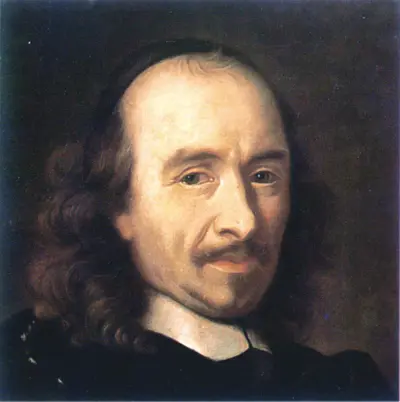
Corneille was born in Rouen, Normandy, France, to Marthe Le Pesant and Pierre Corneille, a distinguished lawyer. His younger brother, Thomas Corneille, also became a noted playwright. He was given a rigorous Jesuit education at the Collège de Bourbon (Lycée Pierre-Corneille since 1873) where acting on the stage was part of the training. At 18 he began to study law but his practical legal endeavours were largely unsuccessful. Corneille's father secured two magisterial posts for him with the Rouen department of Forests and Rivers. During his time with the department, he wrote his first play. It is unknown exactly when he wrote it, but the play, the comedy Mélite, surfaced when Corneille brought it to a group of traveling actors in 1629. The actors approved of the work and made it part of their repertoire. The play was a success in Paris and Corneille began writing plays on a regular basis. He moved to Paris in the same year and soon became one of the leading playwrights of the French stage. His early comedies, starting with Mélite, depart from the French farce tradition by reflecting the elevated language and manners of fashionable Parisian society. Corneille describes his variety of comedy as "une peinture de la conversation des honnêtes gens" ("a painting of the conversation of the gentry"). His first true tragedy is Médée, produced in 1635.
