Livy Quotes
Resistance to criminal rashness comes better late than never.
Livy. The History of Rome. Translated by Rev. Canon Roberts, J. M. Dent & Sons, 1912, Book 4, Ch. 2.


The “thieves” won in the sense that TR was the choice of the vast majority of the Republican voters of the time, yet the party bosses manipulated the convention to deny Roosevelt the nomination. Taft was nominated, and Roosevelt ran on the Bull Moose Party and outpolled Taft, but they split the Republican vote and lost to Democrat Woodrow Wilson.


This interesting historical quotation illustrates the fact that in almost every American generation there are those who believe that society has gone too far in protecting the rights of criminal suspects at the expense of law and order in the general society. This is nothing new. This is a classic argument given by those who would deny a defendant the Constitutional protection against self-incrimination. The belief that an innocent man has nothing to fear from the police is refuted by the many cases of innocent men being convicted by evidence they have given in the belief that they were innocent, and served long jail sentences only to later be proved by DNA evidence that they could not possibly have been guilty. Since Nott’s day, society has not only found many cases where honest error was made by the police or prosecutors, but many where there was venal prosecutorial misconduct and defendants were jailed even though the authorities were aware of evidence of innocence and kept it secret. There have been a number of these cases where a defendant was on death row and about to be executed when it was found he was innocent. Probably there have been men wrongly executed. See {629444} for a probable example.

This has been the case in EVERY jurisdiction that has had capital punishment. Capital punishment does provide vengeance for victims, relatives and society. And in many societies execution is less expensive than prison for life. But it has never curtailed crime despite the example. In London, they used to have public executions as examples to inhibit crime. While the crowd was watching a pickpocket be hung, other pickpockets were relieving many spectators of their wallets and watches.

1st Marquees of Halifax. Even in the 18th century, it was realized that capital punishment was not a particularly good deterrent. Savile and others observed that there was a significant vengeance motive for state execution.


Kennedy, the father of JFK, had been one of the sleaziest of the stock market manipulators in the country. Prior to 1934 the Republican Hoover philosophy had prevailed letting the market regulate itself. But the practices of many of the Wall Street leaders were by modern standards outright thievery.FDR created the first Commission to regulate publicly traded stock transactions and schemes. He made a shrewd pick with Kennedy who was very egotistical and ambitious for power and recognition for Kennedy not only was an accomplished master at the skullduggery of the day, but he had no loyalty to the wealthy brokerage and financial leadership class as Kennedy was a Roman Catholic and at the time Catholics were never really accepted by upper class Protestant society. He turned out to be not only the first SEC Chairman but the one who demonstrated the efficacy of such regulation. He was then rewarded with the Ambassadorship to England the plum diplomatic assignment of the country.


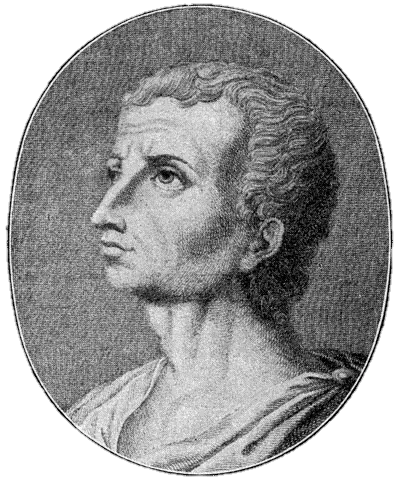
Titus Livius (/ˈlɪviəs/ LIV-ee-əs, Latin: [ˈtɪtʊs ˈliːwijʊs]; 64/59 BC – AD 12/17), known as Livy (/ˈlɪvi/ LIV-ee) in English, was a Roman historian. He wrote a monumental history of Rome and the Roman people, titled Ab Urbe Condita, ''From the Founding of the City'', covering the period from the earliest legends of Rome before the traditional foundation in 753 BC through the reign of Augustus in Livy's own lifetime. He was on familiar terms with members of the Julio-Claudian dynasty and even in friendship with Augustus, whose young grandnephew, the future emperor Claudius, he exhorted to take up the writing of history.
