Book of Romans Quotes
Render therefore to all their dues: tribute to whom tribute is due; custom to whom custom; fear to whom fear; honor to whom honor
New Testament, Book of Romans, 13:7
Sourced by: Eigen's Political and Historical Quotations


To afford the President the greatest deference and respect should be a gratification to any citizen.
The Secretary was a very formal and proper man.


This passage was one of those used by Christian apologists for slavery. Critics of some Christian churches point to this passage as illustrating the lack of morality in traditional Christianity when it same to fundamentals such as human slavery. In this particular quotation, the slave master is likened to Christ. Ironically, it was Christian abolitionists in England and the United States who saw other passages of the New Testament and the Gospel of Christ as disapproving of slavery and those Christians where among the most effective of the abolitionists.


In the British Constitutional Monarchy of the Victorian Era, the Queen still possessed enormous power and many in Parliament was constantly trying to have Parliament assume many of the Queen’s powers. The Prime Minister was in an awkward position. On the one hand, he was the Queen’s Prime Minister and leader of HER government. At the same time he was the leader of the political party that had won the last Parliamentary election. His party was trying to usurp some of the Queen’s powers and Peel explained to the Queen’s assistant that he would generally side with the Queen against his own party. It is doubtful that Anson and the Queen believed Peel on this point as his position as Prime Minister depended not on his being elected by the voters but by his party members of Parliament. In modern times, the British monarch has few real powers but is still very influential so there are no struggles over power with Parliament.

This is an amazing speech which illustrated the best of the development and growth of Islam. Note that: The ruler who has just been given ALL secular AND religious power admits candidly that he may not be the best qualified. This would not happen for over another 1000 years and even today is very rare in any society. In addition, he invites the citizens to correct him when he is wrong. Later, Calihs would, like the Christian kings and popes claim infallibiity and kill any who suggested otherwise. And daring to correct the ruler was capital offence for most of history and is even dangerous in some Muslim countries today. Last and perhaps most amazing, the new Caliph called for an affirmative leveling of the inequality of rights and power and announces it asa one of his major responsiblities. It is this kind of vision so unheard of at the time which shows us why so many flocked to Islam at the time. From a fairness, human rights, and accoutabiity of the ruler point of view Islam was the most modern of the religions then. Tragically, other forces shaped Islam for the next 1500 years and most Muslim countries become the least modern and its rulers are least accountable to the citizenry with none of the other rights and concept of fairness that Abu Bakr and other early Islamic leaders brought.
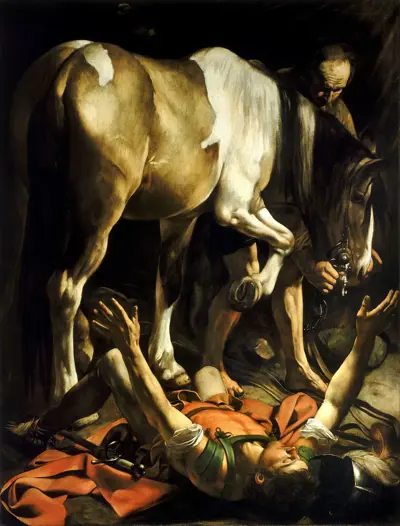
The Epistle to the Romans or Letter to the Romans, often shortened to Romans, is the sixth book in the New Testament. Biblical scholars agree that it was composed by Paul the Apostle to explain that salvation is offered through the gospel of Jesus Christ. It is the longest of the Pauline epistles.
