Socrates Quotes
The greater the power that deigns to serve you, the more honor it demands of you.
Xenophon. The Memorabilia. Translated by H.G. Dakyns, Macmillan and Co., 1897, p. 160.


Note that even in the marriage ceremony where the couple pledges fealty to each other, the intrusion of this pledge of loyalty and obedience to the Master.


He was criticized by the right wing extremists of the Repuplican Party for serving a Democratic President (Obama) as Ambassador to China. He was the most qualified person for the job as he was an experienced politician, spoke Chinese fluently and was very knowledgeable about Chinese culture and history. The President had asked him rather than many people of his own party. Huntsman’s quotation is probably the most patriotic and eloquent statement of national service ever made.


At the height of the Watergate scandal, the president wanted special prosecutor Archibald Cox fired, because Cox was developing evidence against the president. The attorney general, Elliot Richardson, refused to fire Cox and resigned. The chief of staff then turned to the deputy attorney general, William Ruckelshaus, who also refused and resigned. Finally, the Solicitor General, next in line of authority, agreed to fire the special prosecutor. These events happened on a Saturday night and became known as the “Saturday Night Massacre”. This event persuaded most Americans that Nixon was guilty of felonies and was desperately trying to cover things up. Congress would include “obstruction of justice” in it’s list of crimes that they would have impeached Nixon for had he not resigned.


5th Earl of Rosebery
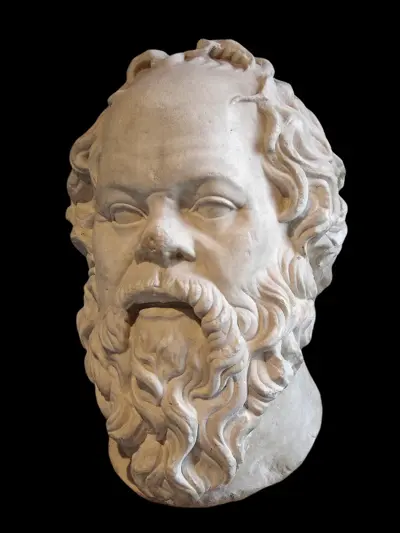
Socrates (/ˈsɒkrətiːz/; Ancient Greek: Σωκράτης Sōkrátēs [sɔːkrátɛːs]; c. 470 – 399 BC) was a Greek philosopher from Athens who is credited as one of the founders of Western philosophy, and as being the first moral philosopher of the Western ethical tradition of thought. An enigmatic figure, he authored no texts, and is known chiefly through the accounts of classical writers composing after his lifetime, particularly his students Plato and Xenophon. Other sources include the contemporaneous Antisthenes, Aristippus, and Aeschines of Sphettos. Aristophanes, a playwright, is the main contemporary author to have written plays mentioning Socrates during Socrates' lifetime, although a fragment of Ion of Chios' Travel Journal provides important information about Socrates' youth.
