Daniel Webster Quotes
The law: it has honored us; may we honor it.
Webster, Daniel. "Dinner of the Charleston Bar." The Works of Daniel Webster, Vol. 2, Charles C. Little and James Brown, 1851, p. 392.


The Illuminati was a secret society. At the time, anyone who differed with the Church on issues of philosophy, ethics or religion could be tortured and burned at the stake, and anyone who criticized the Monarchy could be tortured and hung or beheaded. The result was the concept of a secret society of which the Illuminati was one.


Note that the two do NOT ALWAYS coincide. There are those who argue that law should be respected, right or wrong. There are also those who argue that law should be respected, only when it is in the right. Note also that “respect” and “obedience” are two different things. Some people argue that law and the courts and government must have respect. Others that they are only due obedience but not necessarily respect when they are in the wrong. Still others, like Thoreau, that obedience even is not required when the law is wrong. There are those who take this to the degree that obedience to a “wrong” law is wrong and there is a DUTY to disobey a wrong law. However, a more nuanced view does not treat all laws as the same importance. I may think a particular tax is unjust and wrong, but obedience does not necessarily have moral consequences. A law that says that people with a certain religion must not be hired, however, is sufficiently immoral that I am obliged to disobey it.

This is an amazing speech which illustrated the best of the development and growth of Islam. Note that: The ruler who has just been given ALL secular AND religious power admits candidly that he may not be the best qualified. This would not happen for over another 1000 years and even today is very rare in any society. In addition, he invites the citizens to correct him when he is wrong. Later, Calihs would, like the Christian kings and popes claim infallibiity and kill any who suggested otherwise. And daring to correct the ruler was capital offence for most of history and is even dangerous in some Muslim countries today. Last and perhaps most amazing, the new Caliph called for an affirmative leveling of the inequality of rights and power and announces it asa one of his major responsiblities. It is this kind of vision so unheard of at the time which shows us why so many flocked to Islam at the time. From a fairness, human rights, and accoutabiity of the ruler point of view Islam was the most modern of the religions then. Tragically, other forces shaped Islam for the next 1500 years and most Muslim countries become the least modern and its rulers are least accountable to the citizenry with none of the other rights and concept of fairness that Abu Bakr and other early Islamic leaders brought.


The first non-PRI President in over 70 years.

This quotation is sometimes misunderstood by Westerners as implying that abstract justice is not as important as practical achievements. However, to the Bedouin, as to most Arab cultures, abstract justice is extremely important—as is reputation. The Western translation might be: “Don’t confuse getting justice with achieving material gain. Often you may not gain anything material, but you still must maintain your honor or reputation. This notion, as many Arab ideas, starts out as applying to individuals, and then generalize to families, clans, tribes, nations, and even Islam as a whole.


This is one of the major reasons that the relations between police and the communities they are policing is so important. Also, the style and courtesy that the IRS tax collectors exhibit is very important.


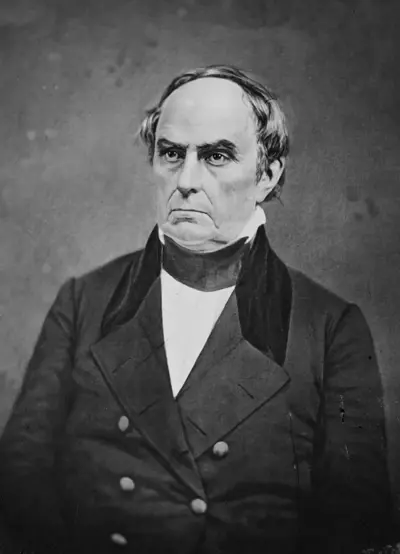
Daniel Webster was an American lawyer and statesman who represented New Hampshire and Massachusetts in the U.S. Congress and served as the U.S. Secretary of State under Presidents William Henry Harrison, John Tyler, and Millard Fillmore. As one of the most prominent American lawyers of the 19th century, he argued over 200 cases before the U.S. Supreme Court between 1814 and his death in 1852. During his life, he was a member of the Federalist Party, the National Republican Party, and the Whig Party.
