Wendell Willkie Quotes
Regulation has crept up on us steadily…. The most alarming feature of this concentration of power in the Federal government is the creation of omnipotent commissions to exercise it. The new fields of Federal control are administered by small Boards or executive commissions, usually appointed by the President and responsible to no one but the President. They are part of the Executive Department. But their function is not executive only. They have two additional functions: one is legislative, the other is judicial. These commissions write the rules which make the laws effective. Then they administer the rules; and when the rules are violated, they it in judgment on the violations.
Wendell Wilkie, 1892-1944, Republican candidate for President (IN), Speech, 44th Congress of American Industry, December 8, 1939
Sourced by: Eigen's Political and Historical Quotations

See Louis Brandeis for a later judicial interpretation of this view.


This constitution was written 7 years before the national constitutional convention. It shows that there was concern about the separation of powers in United States even before the Constitution was drafted. See {616750} for an even clearer statement of the separation of powers principle.

Hatch was the chairman of the Senate Judiciary Committee at the time.


The "administrative state" was the term used for a government had had powers and used them to regulate things and areas of society without each specific regulation being voted upon by the legislature. In America sicne the New Deal there have been so many areas that have regulations that a single agency like the Environmental Protection Agency might issue in a year more regulations than the entire Congress considers in all areas put together. All these regulatory powers are delegated by Congress passing legislation authorizing it, and Congress can legislate any change in any regulation it wants, but the modern state is so complesx and areas so specialzied that Congress has preferred to delegate. There are a few who legal scholars and politicians who believe that it is unconstitutional for the legislature to delegate powers to the executive branch and no regulations have validity unless specifically passed by Comgress. There are some others who have not taken a position on this point but who believe that of an administrative state can regulate phases of citizens lives it is bound to circumscribe personal freedom as all legislation does to some extent. This quotation was used by opponents of Judge Gorsuch in arguing that he was unfit for the Supreme Court as he was out of touch with the Administrative State which America gradually became and rapidly in the New Deal and in the 80 years thereafter a very extensive administrative state. Gorsuch's views were based on classic political pholosophy but there were some ultra conservatives who did not want any regulation of business by Congress or Administrative Agencies and therefore supported Gorsuch and the few others with this view as if Agencies were not able to issue regulations there was no practical way that Congress could issue as many and regulation would be reduced which is what they desired.


This concept of balance of power and the equal role of the judiciary is actually quite rare. Even in Parliamentary democracies the parliament can override any court interpretation. In England, the upper legislative house, the House of Lords, actually serves as the nation’s highest or supreme court. And these “Law Lords” can override all regular judicial bodies.


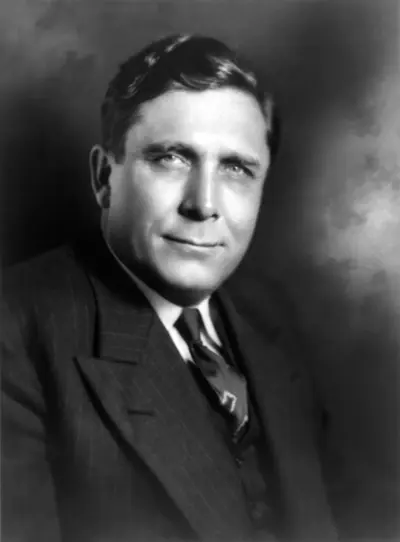
Wendell Lewis Willkie was an American lawyer, corporate executive, and the 1940 Republican nominee for President of the United States. Willkie appealed to many convention delegates as the Republican field's only interventionist: although the U.S. remained neutral prior to Pearl Harbor, he favored greater U.S. involvement in World War II to support Britain and other Allies. His Democratic opponent, incumbent President Franklin D. Roosevelt, won the 1940 election with about 55% of the popular vote and took the electoral college vote by a wide margin.
