Andrew Jackson Quotes
[Referring to his successor:] The present imbecile chief.
Andrew Jackson, 1767-1845, 7th President of the United States (Democrat, TN), Description of President William Henry Harrison, 1841
Sourced by: Eigen's Political and Historical Quotations


Dwight D. Eisenhower had become President of Columbia University. At one of his first meetings with the Faculty Senate, Eisenhower in response to a question stated that the University could not countenance such a policy. At this point, Professor Highit, the Dean of the Faculty Senate, interrupted Eisenhower with this legendary quotation. At Columbia as well as many other of the best private universities, it is the faculty Senate that is the highest educational policy making organ. See {634253} for one of the origins of this. Eisenhower and the University were both great but they were a bad fit. Some historians believe that it was the bad experience at Columbia that brought Eisenhower into Presidential politics. If he had been successful at Columbia, he might have stayed there for his career.

While the Southerners, and Northern Democrats accused Lincoln of precipitous, hasty and radical actions, radicals of his own party were not happy with him as he didn't move fast and firmly enough.

While Bannon was more critical of anyone who disagreed wiuth him than most, it was unusual for a conservative to use such harsh tems about a conservative presidential administration.

Romney was then running for the Republican Presidential nomination, and was taking a shot at President Obama.

Ex HEW Secretary John Gardner, the founder of the citizens' lobby, Common Cause, was testifying before Hays' committee: Gardner, considered an excellent Secretary by most, was a reformer who was making some suggestions not to Hays’ liking. This quote was Hays’ reposponse to Gardner. Hays was not only a bully but his lack of tact caused the State Departmemt much trouble. See {622348}.

Hooker made some very poor decisions as far as Lincoln was concerned.


Lippmann was the leading political pundit of the time. He, like many others, totally underestimated Roosevelt whose easy-going manner, and non ideological style tended to put off ideologues and some intellectuals. See {609696}.

Before Governor Mecham was impeached, Senator John McCain called for his resignation. After Mecham was impeached for misusing State funds and thwarting investigations of death threats, he commented upon McCain's qualifications for a place on the Republican national ticket:


Some of the Right Wing attacks in President Obama were without any foundation of facts. All presidents have to work extremely hard, and if they were not “workaholics” they could not even get nominated for the post. Many critics saw a racist element in this attack. In Sununu’s youth there was a slander by which racists used to refer to Blacks as “lazy and shiftless”. Obama was the first Black President and whereas that demonstrated that the nation had gotten past much of its racism, some still remained and this might have been a vestige of it.

Blair was then the leader of the opposition Labor party. Major, the prime minister, did not have firm control of his own party and was whipsawed between different factions. He was ousted by his own party, not by losing an election.


She responded to the Lord Chief Justice and to Lord Cecil and asked them to so inform the Commons and the House of Lords. Cecil needed three drafts to convey the response but tone it down a little, thus performing the duties of a modern press secretary.

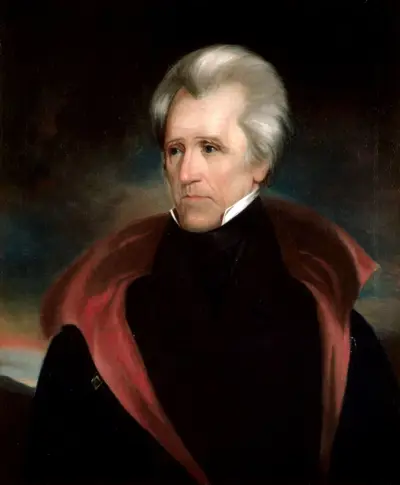
Andrew Jackson was an American lawyer, soldier, and statesman who served as the seventh president of the United States from 1829 to 1837. Before being elected to the presidency, Jackson gained fame as a general in the United States Army and served in both houses of the U.S. Congress. An expansionist president, Jackson sought to advance the rights of the "common man" against a "corrupt aristocracy" and to preserve the Union.
