W. E. B. Du Bois Quotes
Raphael painted, Luther preached, Corneille wrote, and Milton sang; and through it all, for four hundred years, the dark captives wound to the sea amid the bleaching bones of the dead: for four hundred years the sharks followed the scurrying ships; for four hundred years America was strewn with the living and dying millions of a transplanted race; for four hundred years Ethiopia stretched forth her hands unto God.
Du Bois, W. E. B. The Souls of Black Folk. A. C. McClurg & Co., 1903, p. 191.


Eldest son of Robert Walpole. Lord Dunmore, royal governor of Virginia, had issued a proclamation offering freedom to slaves willing to defend the Crown


Slovak aspirations for autonomy have been constant despite the economic disadvantages. After the fall of the Soviet Union, the Slovaks voted for independence from Czechoslovakia. See {613460} for Derer’s argument for a unified country.

Abraham Lincoln in his famous eulogy to Clay in Springfield, IL, used this quotation.


What is interesting is that when he cites the dreadful facts about American slavery, he never points out that the American slave traders rarely raided the villages and captured the slaves themselves. Most often this was done my Khamenei’s Muslim brethren slave traders who dominated the slave trade in Africa. Nor does he point out what after realizing the evil that Americans perpetrated with slavery, we ended it in the 1860s. Saudi Arabia, the central nation of Islam, did not make slavery illegal until 100 years later, and even today, there are many Saudi’s who get caught practicing slavery with household servants and forms of indentured servitude. And while Christians and the Bible tolerated slavery, the Koran and the Prophet never once condemn the practice of slavery. Democracy at any point in time is not always morally right, but it is a process by which under pressure from the people it improves over time because the people can change it and do.


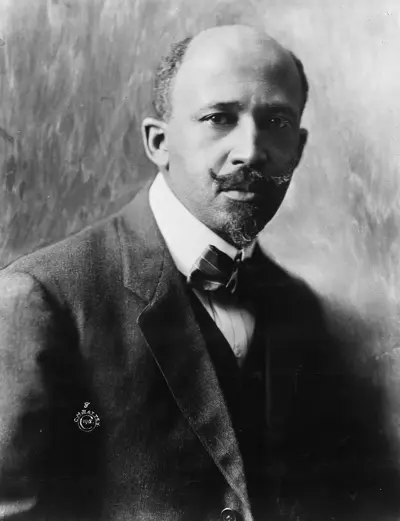
William Edward Burghardt Du Bois was an American sociologist, socialist, historian, and Pan-Africanist civil rights activist. Born in Great Barrington, Massachusetts, Du Bois grew up in a relatively tolerant and integrated community. After completing graduate work at the Friedrich Wilhelm University (in Berlin, Germany) and Harvard University, where he was the first African American to earn a doctorate, he became a professor of history, sociology, and economics at Atlanta University. Du Bois was one of the founders of the National Association for the Advancement of Colored People (NAACP) in 1909.
