Muhammad Ali Jinnah Quotes
Protector General of the Minorities
Jinnah was a Muslim nationalist who had blocked a united India after independence. However, once the partition began and a total bloodbath ensued, he tried to curtail the slaughter. A Muslim mob had attacked and surrounded a Hindu group in Karachi. Jinnah acted to protect the Hindus. Despite the efforts of many Hindu and Muslim leaders, things had gotten beyond their control and millions were killed.
Muhammad Ali Jinnah, 1876-1948, Founder of Pakistan and First Governor General, Title he bestowed upon himself, 1947
Sourced by: Eigen's Political and Historical Quotations

This quotation which appears absurd on the surface given Iran’s terrible record with religious minorities provides insight to Islamic orthodox thought. For the orthodox Muslim, Sharia—Koranic Law—is the basis of the society. God defines the rights of people and their obligations. Whatever rights are provided by Sharia, Khomeini and some others wished to provide them equally to religious minorities also. However, those rights do not include the right to criticize the Islamic law or the leaders who implement it. That would be heresy if done by a Muslim, a Christian, or a Jew. A Christian church may not erect a public cross or ring bells on Sunday. That is prohibited by the Koran and is imposed on all. Bahai religious adherents are tracked down in the Islamic Republic and are often executed. ‘What about their rights?’ they ask. The answer is that the Bahai were Muslims who have become “backsliders” and heretics, and under Sharia, they must be executed for heresy; they are deemed to be heretical Muslims and not members of a minority religion.


He was referring to whether or not Iraq should be a Muslim state.

Arguments against the Partition of India at the time centered around the poor economic viability of a separate Muslim state. However Iqbal and others placed the cultural issues in the forefront. They eventually prevailed.


There was extensive Northern opposition to the idea of Blacks fighting in the Civil War, even from some abolitionists who saw the war as a vehicle to end slavery. A few were concerned that Blacks would be executed by the South if they were captured, and hence would be exposed to unreasonable risk. Others, believed there was sufficient manpower and Blacks fighting would make the South fight harder. Many didn’t believe that Blacks were competent to be soldiers, and others didn’t want Blacks to develop the skills that would later enable them to compete for jobs with whites. Before Albion raising the 54th there were a few Negroes who were in Union uniform, but the concept of a Negro regiment was a much more visible, and controversial concept.


Grandfather of President John F. Kennedy


The Islamic leadership of that era came from the East and not Arabia. Theirs was a much more modern form of Islam where the basic values were very similar to those of other major religions. Also, toleration of minorities was an assumed requirement for all. When the axis of world Islamic leadership shifted to the Arab nations, the fundamentalist intolerance ascended and minorities were not only persecuted but were expelled from Arab countries in an effective ethnic cleansing. “Mussalman” was a then common word used in India to denote a Muslim.

The Armenians were victims of ethnic cleansing where some were chased out and others killed in nearby Nakhijevan and Azerbaijan. The Armenians in turn have been persecuting those Armenian citizens who culturally identify or have origins in Nakhijevan or Azerbaijan. The hatred is so great that in this quotation the President of Armenia claims that the Government cannot protect the minorities because the minorities persecuted the Armenians in those countries where the Armenians were a minority. The conflict is also religious. Armenians are mostly Eastern Orthodox Christians while Nakhijevan and Azerbaijan are predominantly Muslim. Ethnically the Armenians were almost all exterminated in the early


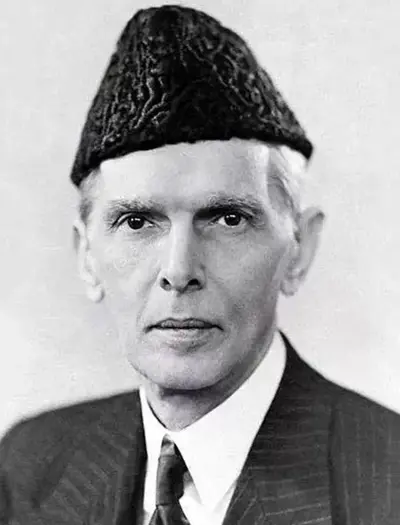
Muhammad Ali Jinnah was a barrister, politician and the founder of Pakistan. Jinnah served as the leader of the All-India Muslim League from 1913 until the inception of Pakistan on 14 August 1947, and then as the Dominion of Pakistan's first Governor-General until his death. He is revered in Pakistan as the Quaid-i-Azam ("Great Leader") and Baba-i-Qaum ("Father of the Nation"). His birthday is observed as a national holiday in Pakistan.
