George F. Will Quotes
Progressives since Woodrow Wilson have aspired to marginalize Congress to insulate the “science” of public administration from politics. The aim is to emancipate supposedly disinterested experts to apply, without political supervision, supposedly neutral science for social betterment.


Note his choice of the word “control”. Some politicians believe that the purpose of most legislation is to enhance the control; that the government maintains over its citizens. However the United States Constitution was written and ratified so that the citizens could control the politicians. Neither group has prevailed totally.


His predictions regarding the termination of Reconstruction were tragically prescient.


At the time, the Tea Party wing of the Republican Party had refused to compromise on anything and many saw as their primary objective was to make sure that the Democratic President was not successful with any of his legislative program. There was gridlock and divided government had become paralyzed government. Buffet and most other Americans were fed up with the gridlock and wanted Congress to start compromising and solving problems.


While this is so in theory, both legislative and executive elected officials often abdicate their responsibility to set policy to the civil servants and Pentagon brass who write the regulations, and interpret the laws and Executive orders. In modern government, there are so many policies that need to be made that Congress and the President and Cabinet often don’t even know the issue exists much less what the national policy is. The Congress and President can choose to make specific policy on whatever they wish, but the Civil Servants as a de facto matter end up making the rest of the policy decisions. When there is Congressional gridlock, Congress can’t make very many policy decisions, so ironically, the civil servants and Pentagon brass make even more of the polices of the government.


This was a subtle criticism of the Presidential Candidate Donald Trump whose only experience was in real estate development, reality TV, and promotion. This was in contrast to his opponent Hillary Clinton who had had vast experience at many roles and levels of government.


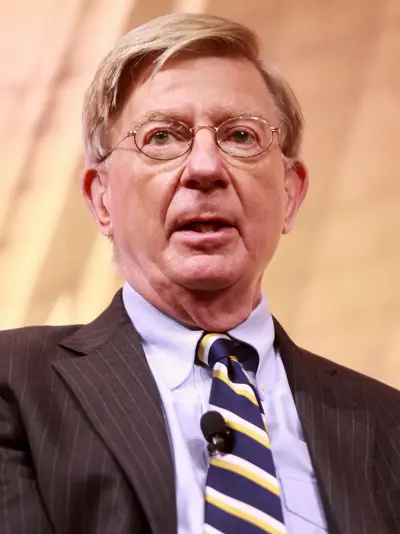
George Frederick Will is an American libertarian-conservative political commentator and author. He writes regular columns for The Washington Post and provides commentary for NBC News and MSNBC. In 1986, The Wall Street Journal called him "perhaps the most powerful journalist in America," in a league with Walter Lippmann (1889–1974). He won the Pulitzer Prize for Commentary in 1977.
