Kenneth E. Boulding Quotes
Private property is a means, and neither its abolition nor its unrestricted right should be an end in itself.
Boulding, Kenneth E. Economic Analysis. Harper & Brothers, 1941.


Theoretically, this decree would have provided a fair amount of economic freedom for communist Russia. This decree gave some degree of comfort to the Western Europe and America, but had some major opponents within world communism who thought it too capitalistic. In practice the rights were never really available and this was one of the many “principles” of Soviet Communism which may have sounded reasonable but were never allowed to function in practice. Within a few years even the pretense of these principles was dropped.


Samuel Langhorne Clemens, 1835-1910. Ironically, during the McCarthy period and the Red Scare of the 1950s, some of the right wingers charged that Mark Twain’s writing was “Communist Propaganda”. Most of the accusers had never read most of Train’s work. At the time, the Communists had condemned the racial segregation that was then legal in America and most of the staunch Southern segregationists accused anyone who attacked segregation as a communist. Twain was one of the leading voices against American racism. As for communism, the accusers of Train had probably never read this particular quotation. Twain was an early severe critic of communism and used his favorite weapon—humor—to attack it.


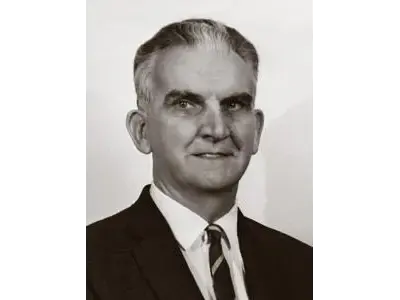
Kenneth Ewart Boulding was an English-born American economist, educator, peace activist, and interdisciplinary philosopher. Boulding was the author of two citation classics: The Image: Knowledge in Life and Society (1956) and Conflict and Defense: A General Theory (1962). He was co-founder of general systems theory and founder of numerous ongoing intellectual projects in economics and social science. He was married to sociologist Elise M. Boulding.
