India Quotes
President’s Rule
India is composed of states much like the United States. However, under the Indian Constitution the sovereignty of the individual states is not guaranteed as in the United States. When the national government of India feels that a particular state is unable to govern themselves properly due to violence, corruption, or incompetence of the state governor and his administration, “President’s Rule” is declared and that entire state is operated as a department of the Federal government until the state is stabilized and “President’s Rule” is revoked.
Indian Political Term
Sourced by: Eigen's Political and Historical Quotations

Martin and other anti-Federalists argued against ratifying the new Constitution as they thought that it was inimical to the state’s interest. The notion of Federalism as a danger to states is clearly stated in this quotation for the debate on Constitutional ratification. Fundamentally, are Senators representatives of their states or of the Federal Government. If the former, who can the senators be recalled or impeached by the states to who the presumably owe their loyalty? This issue, like so many others, was compromised. The States would control the selection and method of selection of the Senators but could not recall or impeach. Looking back, we see this as logically inconsistent. However, looking at it as a political compromise between two legitimate points of view, it seems quite reasonable. Early America was a combination of idealism and pragmatism which has carried throughout American history.

Nehru kept two icons on his desk. One was a gold statue of Gandhi and the other was a death cast of the hand of Abraham Lincoln.

Once the Muslims got their separate country, the Buddhists tried to do the same. The disaster of the Pakistan partition was not about to be be repeated so it never happened.


Fortunately he was wrong, but the threat of a breakup of the American Union intimidated most members of Congress to avoid anything that would offend a state or group of states. Thus slavery became more and more entrenched till it exploded into the Civil War. At the time the issues of contention included the fact that Louisiana was primarily Roman Catholic and ALL other states were majority Protestant. The territory functioned under French Law—the Napoleonic Code, while all the other states operated under the English Common Law (even today this is so), and there was concern with the French and Creole language and whether the Creoles would fit into American Culture.


To conservatives of the day the notion of an SEC or Interstate Commerce Commission or anti-Trust legislation or any kind of Federal interference with a private corporation was basic communism and unheard of. It is hard for us today to understand how radical an idea it was that the Federal Government should inspect food to make sure that it was safe or that a company might be restricted from putting all its competitors out of business with predatory pricing and then when there was no competition left charging outrageous prices and gouge the public. Even the notion of saying that a company could not lie about their products in order to sell them more effectively was radical.


The sectional and special interests and their money made that very difficult for most politicians to do.

The president had the 113th Congress—the most unproductive congress in American history. The Democrats controlled the House and the Republicans controlled the House of Representatives. But the Republicans were badly split between the regular Republicans and the Tea Party republicans who did not want to pass any legislation that would cost money or would make the President look good. The Republican Speaker of the House was not very strong and could not control or even coordinate his own party. So Obama did what Abraham Lincoln and Theodore Roosevelt had done with difficult Congresses, and found as much as he could do by issuing executive orders which did not need Congressional approval. Some of the Republicans were outraged that he was doing what the great Republican Presidents had done earlier and end-running Congress.
This is a very important historical quotation because it clearly stated the left wing view of regulation. Large Business had been so unethical and illegal at the time that the majority of Americans and Congress, together with a Republican President, thought that it would be good to “weld” the growth and development of large companies to the Government. The right wing saw this as extreme Communism. Over time, when corporate greed and excesses had been controlled by government and was not as prevalent, the inhibition on growth and development of welding corporations to Government was recognized and a period of deregulation followed with most Americans not wanting to allow large companies to be completely deregulated and also not wanting them welded to the government. The extent of regulation has been the political contest with the extreme left and extreme right still holding to their ideological positions and sometimes paralyzing the middle as in the Obama administration.

President Roosevelt was on an extended Western trip and had left Taft in charge of the Government as a type of “Acting President”—See {639910} and {640479}. However, many issues were arising including foreign policy problems that had to be handled. Taft was unsure of his authority, but Roosevelt in his own inimitable style assured him with this quotation. No other President since has delegated this much authority to anyone for the operation of the government. With modern communications, it is doubtful that any president will ever do so again.

There was huge pressure on the central government to decentralize as they held all the power in Indonesian society. However, if they devolved power to the Provinces (States), many of them could be large enough and independent enough to secede and become an independent country as East Timor had done. So the Indonesian power structure bypassed the Provincial governments and devolved power directly to the local governments, none of which was independent enough to go it alone. The desired objective was met—no more secessions. However, there was no one to worry about regional and national issues and problems as the politicians who had power were all local. The country was becoming non-functional in many ways.

The things that makes this quotation historically important is how fast Cixi was adopting modern technology as a tool to manage the government and how she was managing day to day the significant international negotiations taking place on the other side of the earth. While in most areas Chinese bureaucracy was notorious for obstructionism and delay, Cixi maintained direct and almost real time control of the parts of the government that she felt most important. She resembled Abraham Lincoln in the sense that they both found innovative ways to use new technology to enable them to better and more directly manage and control the government.


Mead argues that this is a trend that has been operating over many administrations. It could be argued that modern communications and the media have been significant drivers of this phenomenon along with the desire for White House staff to have as much control as they can obtain. Before modern communications, an Ambassador, or a Secretary of Commerce had to make decisions within the philosophical and political umbrella of the President’s general policies. They could not communicate immediately with the President or his staff. But once everyone in the government was connected, the President’s staff could make every important decision. However, with the many different major issues and emergencies of the modern era, the small group in the What House have not been able to deal with them all and the bureaucracy has been instructed not to decide big things without going through the White House. See {642086}.

This was a subtle criticism of the Presidential Candidate Donald Trump whose only experience was in real estate development, reality TV, and promotion. This was in contrast to his opponent Hillary Clinton who had had vast experience at many roles and levels of government.
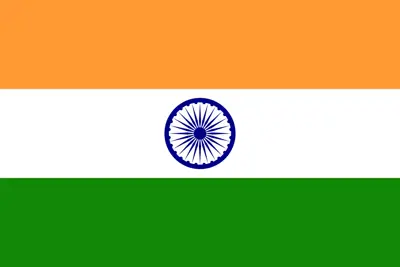
India (Hindi: Bhārat), officially the Republic of India (Hindi: Bhārat Gaṇarājya), is a country in South Asia. It is the second-most populous country, the seventh-largest country by land area, and the most populous democracy in the world. Bounded by the Indian Ocean on the south, the Arabian Sea on the southwest, and the Bay of Bengal on the southeast, it shares land borders with Pakistan to the west; China, Nepal, and Bhutan to the north; and Bangladesh and Myanmar to the east. In the Indian Ocean, India is in the vicinity of Sri Lanka and the Maldives; its Andaman and Nicobar Islands share a maritime border with Thailand, Myanmar and Indonesia.
