Mennonites Quotes
Pray, what thing in the world can be done worse towards us, than if men should rob or steal us away, and sell us for slaves to strange countries; separating husbands from their wives and children. Being now this is not done in the manner we would be done at; therefore, we contradict, and are against this traffic of men-body. And we who profess that it is not lawful to steal, must, likewise, avoid to purchase such things as are stolen, but rather help to stop this robbing and stealing, if possible. And such men ought to be delivered out of the hands of the robbers, and set free …
One of the first anti-slavery formal resolutions in America.
Mennonites, Resolutions of The Germantown Mennonites, February 18, 1688
Sourced by: Eigen's Political and Historical Quotations


As part of his sermon, Beecher would auction the freedom of a slave girl.


This was one of the first steps to ending of slavery in England. The council passed a number of general reforms from this to the prohibition of the clergy frequenting ale houses.

Southern secession and the Civil War This is one of the major quotations with which historians rebut the revisionist view that the Civil War was about States’ Rights or other economic factors.


Brown was the richest man in Rhode Island and made much of his money in the slave trade. This quotation shows that slavery was not completely a North verses South split. Northerners like Brown for whose family Brown University was named, was as virulent supporter of slavery as the most ardent Southerner.

Parker and other escaped slaves in Christiana fought off slave catchers and killed the slave owner leading them. Charged with treason, he escaped to Canada with his family and lived there the rest of his life. While not a polished writer, after he himself had escaped and went to Christiana and leaned to read and write. He wrote this narrative of his life as a slave—one of the few written works we have from slaves.


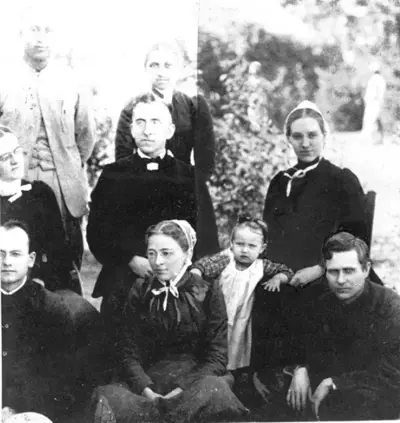
The Mennonites are members of certain Christian groups belonging to the church communities of Anabaptist denominations named after Menno Simons (1496–1561) of Friesland. Through his writings, Simons articulated and formalized the teachings of earlier Swiss founders, with the early teachings of the Mennonites founded on the belief in both the mission and ministry of Jesus, which the original Anabaptist followers held with great conviction, despite persecution by various Roman Catholic and Protestant states. An early set of Mennonite beliefs was codified in the Dordrecht Confession of Faith in 1632, but the various groups do not hold to a common confession or creed.
