James M. Buchanan Quotes
Politically, sometimes you get situations where rent control will go through. It is especially true in an emergency, where there is a sudden, sharp increase in demand for housing or a cut back in supply. People will simply not allow the marketplace to allocate housing resources and so you get pressures for rent control. Once you have it, it is hard to eliminate.
Buchanan, James M. "Interview with James M. Buchanan." Frontier Centre for Public Policy, 2002.


Hoover was the Food Administrator at that time. Although he gave lip service to the free market economy concept, he was proposing government price controls and rationing. When the free market was not functioning, at this time in his career, he was willing to use government controls and regulation. By the end of 1918 over 250,000 food-handling corporations, firms, and individuals were under Food Administration licenses. Meat, fish, poultry, eggs, butter, milk, potatoes, fresh and dried vegetables, and fruits, canned goods, the coarse grains and rice, vegetable oils, coffee, and such various commodities accessory to food-handling, as ice, ammonia (for ice-making), arsenic (for insecticides), jute bags, sisal, etc., were under direct control. Ironically, later when he was President and faced with the Great Depression, he had become much more rigid and would not “interfere” with the free, private market and use government to solve the national problems. It was Franklin Delano Roosevelt who did that after Hoover would not. At the time he gave this speech, Hoover was not very political and was more of a technocrat. It may have been that by the time he became President he was intellectually and politically locked in to Republican Party conservative economic ideology.


To the modern reader utterances such as this from a Conservative Prime Minister seem astounding. However, the Great Depression existed in Canada as well as the United States, and Franklin Delano Roosevelt was not the only world leader who would reach the conclusion that business and capitalism must be profoundly regulated and the system changed if it was to be saved.


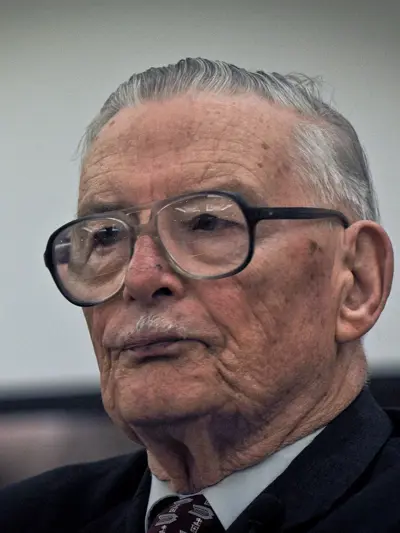
James McGill Buchanan Jr. was an American economist known for his work on public choice theory (included in his most famous work, co-authored with Gordon Tullock, The Calculus of Consent, 1962), for which he received the Nobel Memorial Prize in Economic Sciences in 1986. Buchanan's work initiated research on how politicians' and bureaucrats' self-interest, utility maximization, and other non-wealth-maximizing considerations affect their decision-making. He was a member of the Board of Advisors of The Independent Institute as well as of the Institute of Economic Affairs, a member (and for a time president) of the Mont Pelerin Society, a Distinguished Senior Fellow of the Cato Institute, and professor at George Mason University.
