Tom McClintock Quotes
Point of order. It is a monumental embarrassment for us who intend to vote against this bill that we appear to be on the same side as the speaker.
In a bitter debate on homosexual rights in the California Assembly, David Knowles, a freshman Republican spoke against the bill in extremely graphic and language.
Tom McClintock, California State Assemblyman (Republican), Assembly Debate, September 13, 1991
Sourced by: Eigen's Political and Historical Quotations

This small booklet was the first describing parliamentary procedures and it rapidly sold 500,000 copies. It has become the bases for legislatures, committees, boards ever since. The Congress and most of the State and local legislatures all are based on it.


The House Rules Committee had evolved into a very powerful committee which controlled the debate rules of every piece of legislation that came before the House. This Congress—the worst in American History—passed fewer bills than any other. Those that ever got out of the Rules Committee had Rules that prohibited the minority from even offering amendments.


Senator Conkling was the Republican Leader of the Republican Party and a party boss of the old school. Hays was a reformer, especially about appointments where he generally tried to pick the most meritorious candidate instead of the party loyalists desired by Conkling. There was (and still is) a tradition in the Senate that the Senators from the state of residence of any Presidential appointment had a veto of any Federal appointments in the state. Conkling, in addition to being the party leader, was the senior senator from New York and wanted two party loyalists for the jobs. Hayes appointed the better qualified men and decided to fight for the nomination of his candidates, but expected tha Conkling was strong enough to assure that the Senate would not confirm Hayes’ New York appointments. See {622341} for the outcome.


In the early days of the Senate Filibuster, a senator could hold the floor (and halt all actions) as long as he could continue to speak or 3/5 of the Senate voted to end the filibuster. The filibuster imposed a physical burden on the Senator who chose to use it. Likewise, the other Senators had to be present in sufficient numbers to have a quorum, else the Filibusterer would be able to rest at he did not have to continue to speak if there was not a quorum. The Senate rules were changed to allow a Senator to “announce” a filibuster of a bill, and all action on that bill would stop but there was no burden on the filibustering senator or other senators who had to form the quorum. But in the 112th Congress, the Republicans resorted to more filibusters than there had been in the entire previous history of the Senate and Nelson wanted to return to the old requirement of holding the floor physically.


This quotation illustrates the "winner take all" conceopt of many political cultures that call themselves and think of theselves as a democracy. But a true democracy does not allow a tyranny of the majority--especially a very narrow minority.


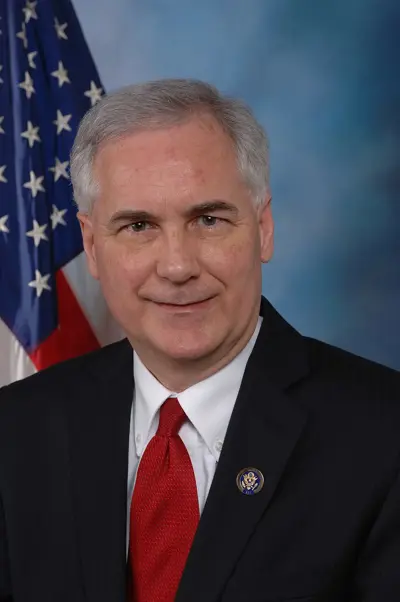
Thomas Miller McClintock II is an American politician serving as the U.S. Representative for California's 4th congressional district since 2009. A member of the Republican Party, his district stretches from the Sacramento suburbs to the outer suburbs of Fresno, and also includes Yosemite National Park. McClintock previously served as a California State Assemblyman from 1982 to 1992 and again from 1996 to 2000, when he became a California State Senator, a position he held until 2008. He unsuccessfully ran for Governor of California in the 2003 recall election and for Lieutenant Governor of California in the 2006 election.
