Aesop Quotes
Please all and you please none.
Aesop, 620 BC-560 BC, Greek Author of Fables, The Miller, His Son, and Their Ass
Sourced by: Eigen's Political and Historical Quotations

As the Majority Leader of the House, Eric Cantor had to resolve conflicts and for coalitions that will compromise to get anything done. However, the Tea Party movement didn’t want any compromises even if it meant shutting down the government and defaulting on the national debt. They ran against conservative Republicans in the Republican primary elections campaigning that the incumbent made and facilitated compromises with Democrats. In some districts like Eric Cantor’s there were enough primary voters who agreed. Terry was explaining the message that the other conservative politicians received.


Wolfe uses the term in the classic sense of appeasing Hitler or Stalin—appeasement of a powerful totalitarian force. However some politicians—usually at the extreme wings of the political spectrum—see any concession to political opponents as “appeasement”. Some, like the Tea Party Republicans of that era, regard any compromise as “appeasement”.

This was before secession and “Confederacy” as Lincoln was using the term referred to the Confederacy or the original 13 states and the territories that joined the Union thereafter.


At the time many of the Republicans wanted to solve the deficit by cutting non-defense and non-homeland security spending only and was opposed to any increase of taxes or any closing of tax loopholes despite the fact that taxes were at the lowest rate that they had been since before the Second World War. The Democrats wanted to increase taxes for the most wealthy Americans by repealing the tax cuts for the wealthy that the George W. Bush administration passed. They were willing to cut spending for the military but did not want to cut services for poor and middle class people—especially Medicare and Medicaid. The public was calling for a compromise and some Republican leaders said that they would agree to cutting a little less than they had originally insisted upon, but would not budget on repealing the tax cuts for the wealthy or in closing tax loopholes for corporations. This triggered the Clinton’s statement. While this quotation was an accurate description for Republican behavior at the time, historically it was not typical of Republicans before that time when the Republican and Democrat view of compromise


In dos nations there are people who will reject any negotiated deal in which they do not get everything that they want. Some even will characterize the deal as a sellout or treason. But to be successful the diplomats from both sides must feel that they have gotten enough so that they can persuade their countrymen and political authorities that the nation has gotten enough to make the deal worth while.
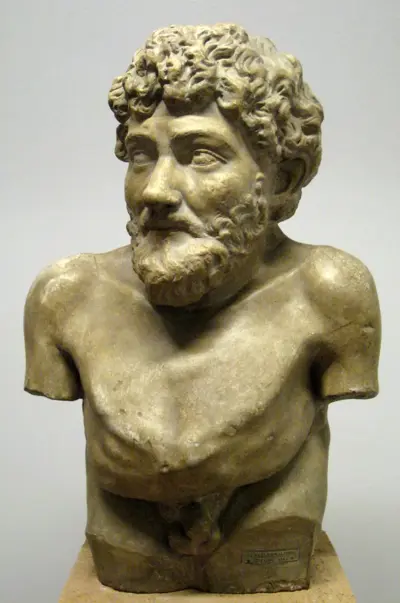
Aesop (c. 620–564 BCE) was a Greek fabulist and storyteller credited with a number of fables now collectively known as Aesop's Fables. Although his existence remains unclear and no writings by him survive, numerous tales credited to him were gathered across the centuries and in many languages in a storytelling tradition that continues to this day. Many of the tales are characterized by animals and inanimate objects that speak, solve problems, and generally have human characteristics.
