Maximilien Robespierre Quotes
Peoples do not judge in the same way as courts of law; they do not hand down sentences, they throw thunderbolts; they do not condemn kings, they drop them back into the void; and this justice is worth just as much as that of the courts.
Robespierre, Maximilien. Oeuvres de Maximilien Robespierre. Vol. 9, Presses Universitaires de France, 1958, p. 123.

Bradlaugh was an atheist and refused to take his oath on a Bible or swear to God. He offered to make an affirmation. The issue was debated for 6 years and finally resolved in Bradlaugh’s favor. The right to affirm instead of take a religious oath is now settled American and English law.

Spinoza was one of the most feared intellectuals in human history—feared that is by the established power structures. He is the only known person who was excommunicated by the Catholics, the Jews and the Muslims—all were forbidden to read his works. He was the enemy of authority and advocated personal reason as the guide for men.


For earlier similar sentiments see Plato and William D'Avenant {312586}.


The English colonial administrators in South Africa and London were appalled at the discrimination against the Black majority practiced by the whites. The white Boers in particular saw them as little more than slaves.


The first Jew to run for the Vice Presidency on a major party ticket.

Commenting on his refusal to give a life sentence to a murderer on the grounds that the murder victim was gay:. the year he would be up for reelection The Judge was later censured by State Commission on Judicial Conduct and failed to win an election as an appellate court judge. However, the judge was not removed.

He dispatched the army to eliminate sin.
He was being cheered by a large crowd.


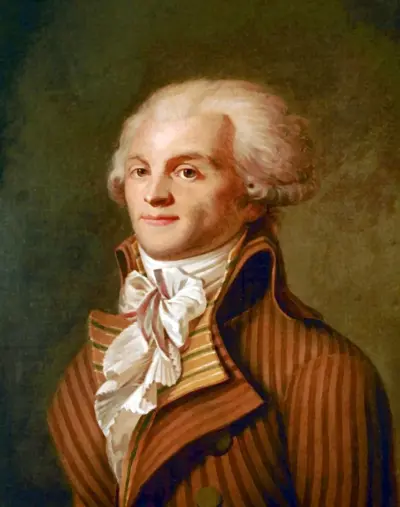
Maximilien François Marie Isidore de Robespierre was a French lawyer and statesman who was one of the best-known and most influential figures of the French Revolution. As a member of the Constituent Assembly and the Jacobin Club, he campaigned for universal manhood suffrage and the abolition both of celibacy for the clergy, and slavery. In 1791, Robespierre became an outspoken advocate for the citizens without a political voice, for their unrestricted admission to the National Guard, to public offices, and for the right to carry arms in self-defence. Robespierre played an important part in the agitation which brought about the fall of the French monarchy on 10 August 1792 and the summoning of a National Convention. His goal was to create a one and indivisible France, equality before the law, to abolish prerogatives and to defend the principles of direct democracy.
