George Ade Quotes
People so primitive that they did not know how to get money except by working for it.
George Ade, 1866-1944, Writer, Fable of the Cut-Up who Came Very Near Losing his Ticket
Sourced by: Eigen's Political and Historical Quotations


Ingersoll was considered to be the greatest orator and political thinker of his day, but his overt atheistic views curtailed his elected political career.


At the time, the middle and upper class Spaniards did everything possible to avoid working with their hands. As a result, Spain fell behind much of Europe in terms of industrialization and mechanics and technology.


Ten cents a day was a very low wage—it was about the equivalent of a meal at a tavern at the time. Workers throughout the country were outraged and give him a derogatory nickname—see Quotation 643585.

3rd Earl Russell of Kingston

Debs had unconstitutionally been arrested and jailed for opposing American entry into World War I. He was later pardoned by President Warren G. Harding.

Ironically, Fitzhugh who detested socialism, held this basic socialist principle. His solution however, was that the profits were necessary for society, and therefore slavery was the solution for Blacks AND whites.
At the time, it did seem impossible that labor and capital would ever have harmonious relations. But the notion that slavery would solve the problem is as preposterous as anything ever entered into the American political dialogue. But there were many in the South, and some in the North, who actually believed it. Even 150 years later, while labor and capital relations were much better than pre Civil War, they still could not be described as “harmonious” or “friendly”.


The Southern slave culture not only damaged the Blacks but had this terrible effect on the whites. Southern work and industrial productivity would take a century to be comparable to the rest of the country.

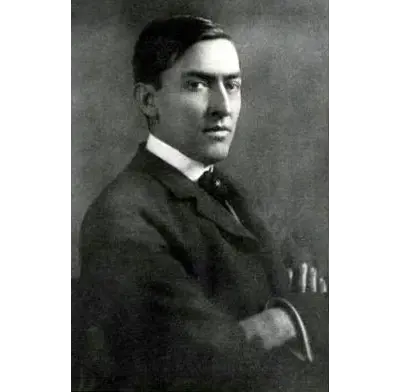
George Ade was an American writer, syndicated newspaper columnist, and playwright who gained national notoriety at the turn of the 20th century with his "Stories of the Streets and of the Town", a column that used street language and slang to describe daily life in Chicago, and a column of his fables in slang, which were humorous stories that featured vernacular speech and the liberal use of capitalization in his characters' dialog.
