Gene Green Quotes
People just don't know what civilian prisoners of war are.
Green, Gene. "Civilian POWs." Congressional Record, Government Publishing Office, 10 Apr. 2003.

This clause applied to German POWs in America caused a problem for Blacks in the military were harshly discriminated against by a then discriminating country. The result was that Nazi POWs did not have to move to the back of a theater while the Back GIs were required to, and a host of other gross indignities.


The problem that was facing the nation in the early 21st century was when we captured a terrorist, was he a combatant or was he accused by a personal enemy, and had he been tortured to say he was a terrorist. The issue grew more complicated when terrorist suspects were brought to American territory at Guantanamo Bay, and the Courts have always held that a foreigner on American soil had a right to have access to the Federal Courts just as Citizens do. Complicating the situation more was the fact that a few American citizens had joined the terrorists and were they entitled to a civilian trial as all other Americans were.


The President established the principle that since the government was founded on the will of all citizens, then the life and liberty of each citizen was the responsibility of all. In the Marine Corps Hymn, the “shores of Tripoli” refers to the attack by US Marines to free American hostages and eliminate attacks on our merchant ships. The result was very successful and Jefferson wanted to reward the leaders by giving them promotions but Congress had to first authorize the positions.


Buckley’s mother, the entertainer Lena Horn, refused to entertain at an American base where white GIs sat in the front, the German prisoners of war in the middle and the black GIs in the back. This was typical of prisoner of war facilities throughout the South.

There has always been some confusion in the case of the Wars in Afghanistan and Iraq. The Geneva and Hague conventions are very clear when prisoners are official members of an state’s armed force with uniforms, insignia and ranks. It is also clear with respect to civilians. But the combatants of the insurgent and terrorist forces fall in between, and international law is less clear. The George W. Bush administration at first took the position that the captured combatants were not captured soldiers and were therefore not entitled to the treatment due that status. But the military regulations made no distinction as to how prisoners in combat should be treated. It is a very gray area, except that in either case, torture is illegal under U. S. and under International law.

The note was found in an abandoned Japanese camp on Bataan. There are some who believe that this note was a forgery. However, most think it genuine as it reflected one of the Japanese
“aces in the hole” to defend against an allied invasion of the Japanese mainland. It was one of the reasons that some American planners advocated use of the Atomic Bomb. Of course that was a real risk of using the bomb. The Japanese might be so angry and feel morally abused and kill the many allied prisoners they had. Many thought it was a lesser risk because it did not have the symbolic animus that foreigners occupying the Japanese homeland had. The quotation illustrates the amazing complexity that the American and allied leadership faced trying to end WWII in the Pacific.


The American sailors had been captured and were being held for ransom by the Barbary Pirates in terrible conditions. The pirates stated that they were slaves and would be sold if the United States did not come up with enough ransom money. After much debate in America, a squadron of Naval Troops had been dispatched to the Mediterranean where they would “negotiate” with cannon—attacking the ports of the Barbary States.


aware of the atrocities inflicted on Union prisoners of war at Confederate Prison Camps His testimony was corroborated, and the Commandant of Andersonville was found guilty and hanged.


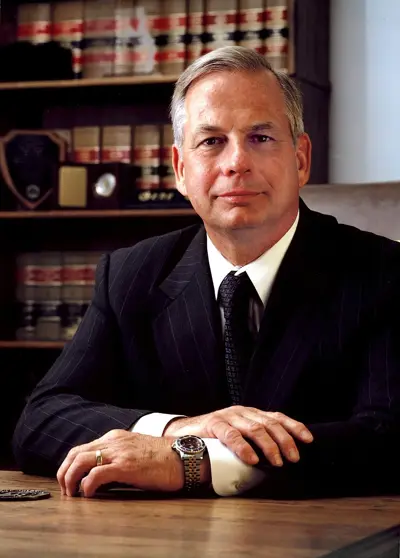
Raymond Eugene Green is an American politician who served as the U.S. Representative for Texas's 29th congressional district, serving for 13 terms. He is a member of the Democratic Party. His district included most of eastern Houston, including portions of the suburbs.
